Riya and I first crossed paths during the Hilley-Varsey-Gorkhey trek. Since then, we shared a common dream of tackling a longer journey together. With the Puja holidays approaching, Phalut seemed like the perfect destination. We spent weeks planning our trek, eager to spend several days walking through the mountains side by side. However, little did we know that an unexpected twist waited for us at the very end of the trail.
Getting to the Mountains
Having secured our trek arrangements through Himalayan Passion, we boarded a bus from Kolkata destined for Siliguri. It was Saptami, the second day of Durga Puja, and the festive spirit pervaded the air around us. The bus deposited us near the Tenzing Norgay Bus Stand, giving us the chance to visit a nearby Puja pandal before we began our ascent into the mountains.
From Siliguri, a cab arranged by the trekking agency transported us to Srikhola, where we intended to spend the night. Along the way, we paused briefly at Manebhanjyang; while some of our fellow trekkers collected additional gear, I purchased an Om Mani Padme Hum flag to attach to my backpack. It seemed like a fitting companion for the journey ahead. We stopped for lunch at Dhotrey, where we were treated to a hearty meal of momos and thukpa. The warmth of this food was especially welcome as we ventured further into the hills. By the time we arrived at Srikhola, it was past five in the evening, and darkness was quickly approaching.
Once settled into our homestay, the two of us joined the rest of the group: fifteen fellow trekkers, two trek leaders, and our guide. The trek leaders briefed us on the days ahead, and soon after we gathered for dinner. With the logistics handled and the formalities out of the way, we settled in for the night, eagerly anticipating the beginning of the trek the next morning.
The Path to Gorkhey
The morning light broke early over Srikhola, casting a pale gold across the valley floor as we prepared for our first full day on the trail. We had wisely left behind the burdens of unnecessary luggage back at base camp, ensuring that the pack on our shoulders held only what was essential. With warm breakfasts and a few final words of counsel from the trek leaders regarding the terrain ahead, we stepped out onto the path at 8:30 AM.
The trail rose gently against the mountainside, weaving through a tapestry of lush greens and wildflowers that dotted the forest floor like scattered jewels. The trek leaders encouraged a steady, disciplined rhythm for the group, but Riya had a different philosophy. She preferred to linger in the rear, her feet pausing often to capture photographs or simply drink in the stillness of the surrounding world. There was no need to rush; after all, the destination was merely a coordinate on a map, whereas the journey was where we truly lived.
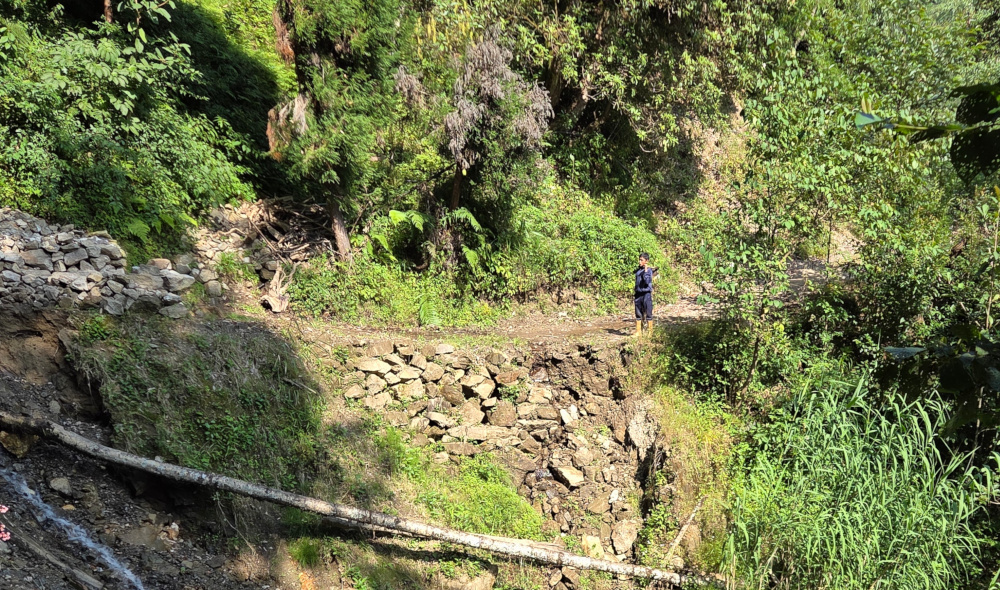
By midday, we found our footing at a homestay perched high upon the Rammam mountainside. The view from the terrace stretched endlessly over the hills, offering a feast for the eyes that matched the warmth of our meal. Sated and rested, we resumed our descent through the dense canopy toward Samanden.
It was our second visit to this village, yet it felt both familiar and strange. The green meadows and quiet forest encircled it much as we remembered, preserving its charming, unspoken simplicity. But there was a subtle shift—a small mark of time that left us with a tinge of melancholy. A specific meadow where we had once sat, relaxed, and watched the clouds drift away had been replaced by the footprint of a house under construction. It served as a quiet reminder that even our sanctuaries are not immune to change; places we cherish evolve, even if we don't want them too.
As afternoon weariness set in, the trek leaders engaged in a spirited game of football with local residents, their laughter echoing off the trees. Riya and I, however, chose to find stillness on the grassy slope instead. We chatted softly, capturing moments on our lenses, and simply existed within the tranquility of the landscape. There was nothing specific to accomplish, and it was precisely this lack of urgency that made the pause so delightful.
With the sun beginning to dip lower, we finally picked up our pace again, descending toward Gorkhey. Crossing the stream over the old bridge, the familiar landscape unfolded before us, welcoming us home once more. We felt a swell of delight returning to the valley. Gorkhey was not merely a location; it was the sanctuary where Riya and I had first begun to understand one another, where our affection quietly took root. To walk these steps together again stirred a deep resonance in our hearts, bridging past memories with our present reality.
The evening settled over us like a blanket. We settled into the same homestay we had stayed in on our last visit. The sound of the mountain river, a constant companion through the night, lulled us into a profound slumber, leaving us well-rested after a day that felt less like a climb and more like a conversation with nature. Ready for whatever lay ahead, we drifted off, content in the knowledge that we were exactly where we needed to be.
A Morning in Gorkhey
We woke up early the next morning in Gorkhey. The village was still asleep, holding its breath, which gave us the perfect chance to revisit the spots that had become our favorite from the previous trip. We walked over to the other bridge—another checkpoint on our memory map—and spent some time clicking photographs against the backdrop of the morning mist and the humming river.
We found ourselves drawn to the large rock in the center of the village, perched there for a moment to reminisce about our first visit. It felt strange and wonderful to be back in a place that held so many memories for us; time seemed to stretch out between then and now on this quiet stone.
As the group began to rouse from sleep, Riya and I got ready to face the day. Since we had brought matching T-shirts, we took it as our cue to get a proper set of photos. We asked one of our trek leaders to take our pictures, and the results were nothing short of magical.
We settled down for a leisurely morning, sipping on excellent tea and enjoying a filling breakfast. With our backpack packed and our stomachs full, we left the comforting sanctuary of Gorkhey behind. We were no longer tourists looking at a place, but travelers ready to leave it for what came next.
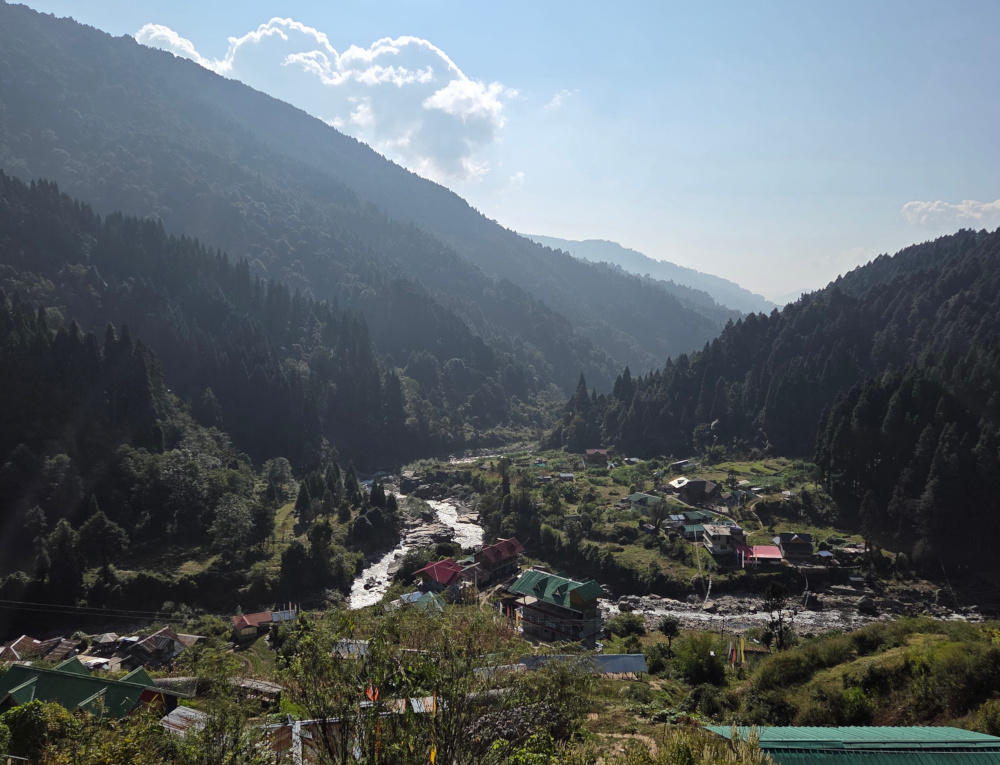
The Long Climb to Phalut
It was destined to be our hardest day yet. We were preparing to ascend from Gorkhey, sitting at 2,347 metres, all the way up to Phalut at roughly 3,600 metres. In a span of sixteen kilometres on the trail, we would need to conquer more than one thousand and two hundred metres of vertical gain. It was going to be a marathon in itself—a long day on the trail, carved into the mountain side.
We began the ascent after casting one final, lingering look at Gorkhey below us. The village had been such a lovely resting place, its warmth made more poignant by our memories of that previous visit where we first walked these paths. Yet, this was no longer the time to linger, and Phalut awaited us in the distance.
The trail wound through the heart of Singalila National Park, carrying us deep into ancient woods. Wildflowers bloomed like confetti along the path, while colourful fruits brightened the shadowed undergrowth. Occasionally, an aromatic pine cone dropped from the trees, smelling of resin and rain. There was a profound delight in walking here, surrounded by such raw natural beauty. Both Riya and I found ourselves intoxicated by the sights, often forgetting—at least for brief, beautiful moments—that there was still a steep climb ahead of us before Phalut.
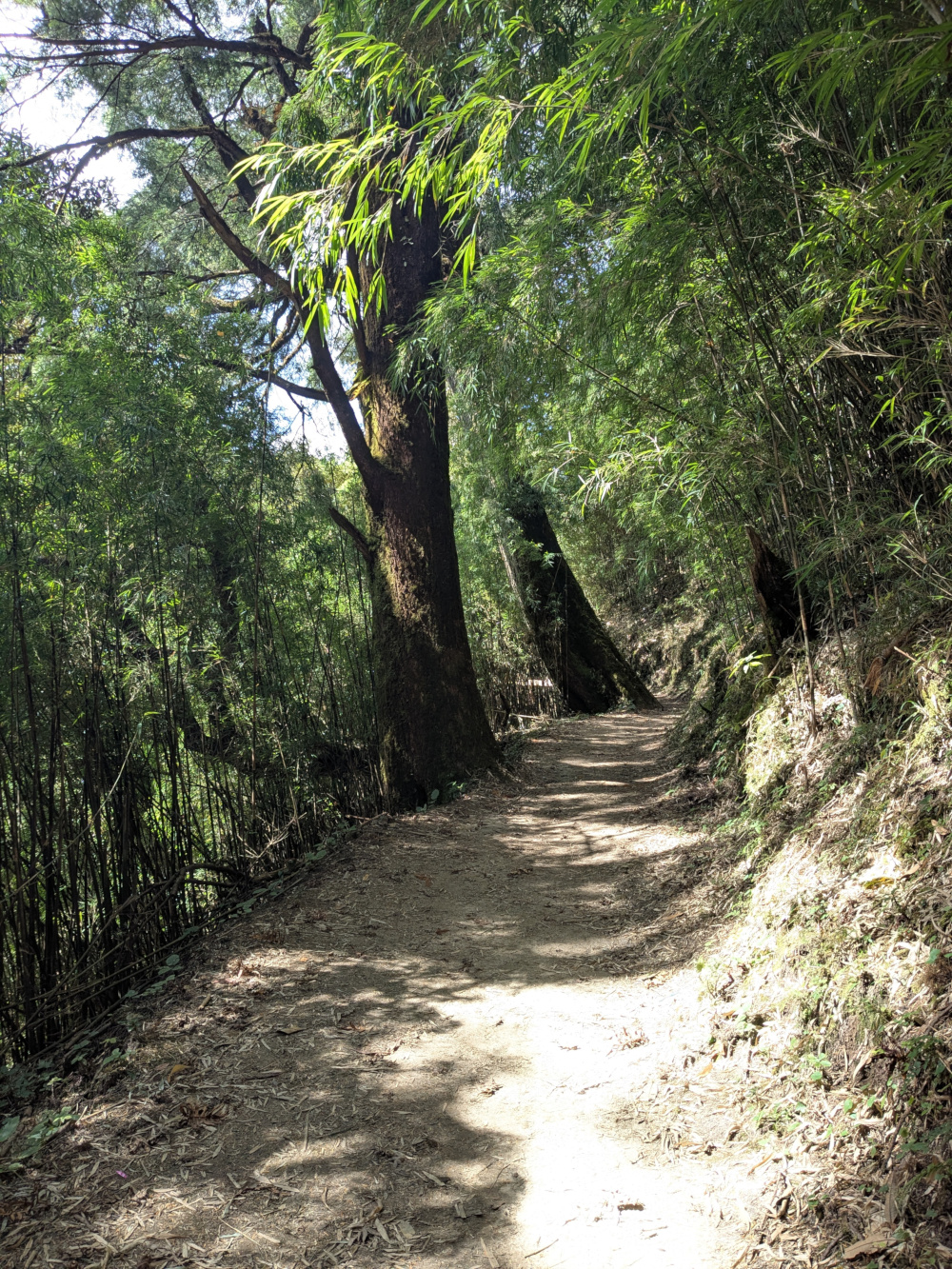
We pulled up for lunch at a small shelter beside the trail. The meal was modest in every way, but after hours of grinding uphill, it tasted phenomenal. There is something transcendent about eating in the high mountains; even the simplest food becomes a feast when your body is exhausted yet your spirit is thrilled by the journey itself. We ate, refilled our water bottles, and prepared to resume the march.
But as the hours stretched on, the mountain began to whisper its warning. Riya started to feel a vague sense of unease settling over her. She was slowing down, and so did our progress; the trail seemed to stretch into infinity. I, along with the trek guide, stayed close by her side, refusing to push, content to take things at her own pace. By then, the rest of the group had pulled far ahead, becoming distant blips on the horizon.
Eventually, we crested the pass and reached Phalut, considerably later than the others. It was a demanding climb, and the relief of arriving at our destination was palpable. We were tired to our bones, battered by gravity and the thin air. But as we looked around the valley below us, we didn't realize that the hardest part of the day might not have been the climb itself. Little did we know that once we had arrived, the true test would be waiting for us.
A Cold Night at Phalut
Our refuge for the night was a small forest hut at Phalut, where the cold arrived not merely as a temperature reading, but as an intruder. It seeped into our bones despite the thick layers of clothing that wrapped us like armor. There was barely any electricity in the valley, leaving us to navigate the darkness by the pool of light cast from our headlamps. When we stepped outside to catch our breath, the moonlight bathed the forest in silver; it was undeniably beautiful, yet the landscape offered no solace for the concerns weighing on our minds.
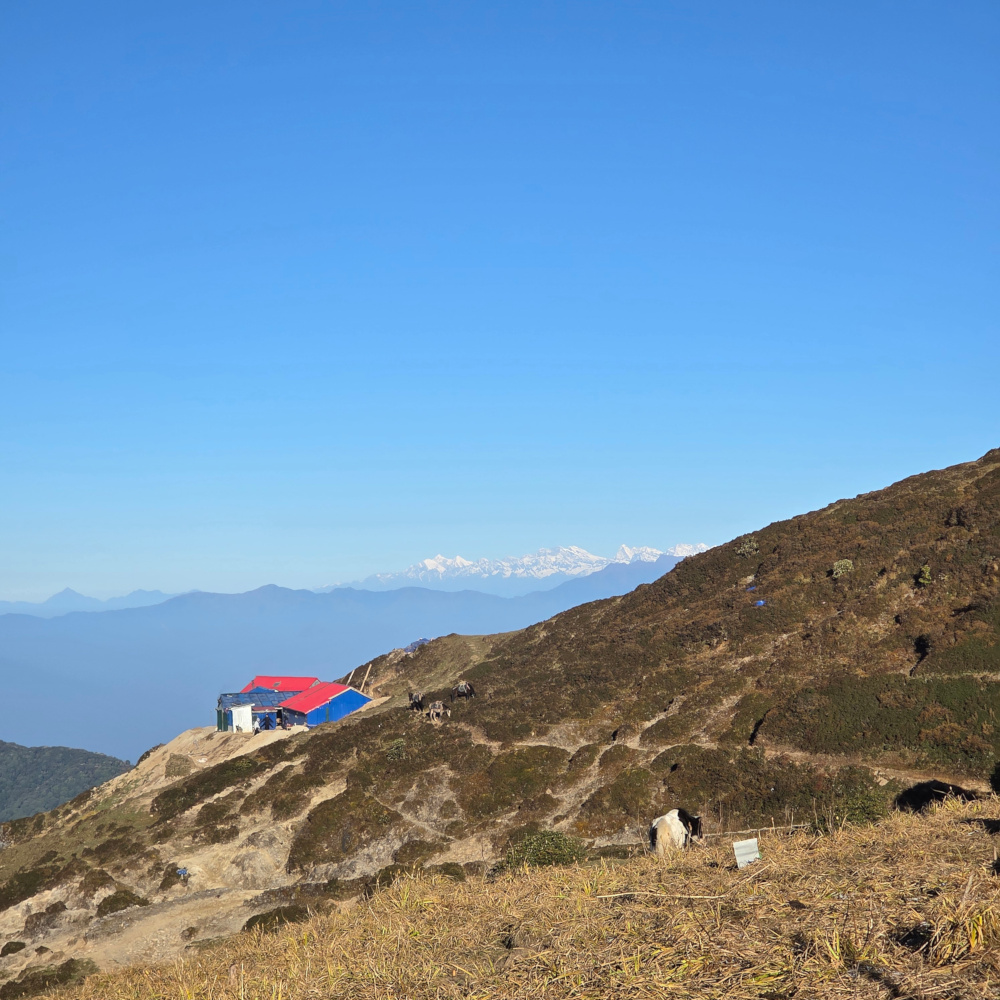
Inside, the atmosphere had shifted to one of care. Riya’s energy began to falter, a persistent headache and lightheadedness clouding her thoughts. It was the altitude taking its toll, that invisible weight climbing up with us. We knew that exertion was no longer an option; we fortified ourselves within the hut, keeping our movements minimal to ensure she remained comfortable and stable.
As the hours bled into one another, a slow thaw began to take place. By the time the clock ticked toward dawn, her condition had stabilized, and the tension in our shoulders eased. Exhaustion finally won, claiming its victory after such a demanding night. We settled down to sleep, needing nothing more than deep, uninterrupted rest. We slept with the quiet assurance that while the present held discomfort, the true prize—the highlight of this entire trek—was waiting for us just beyond the horizon at dawn.
Sunrise over the Sleeping Buddha
The alarm woke us at four in the morning while Phalut remained steeped in its cold, pre-dawn stillness. It was the moment we had anchored ourselves for during the long hours of the trek: the ascent toward the viewpoint. The whole group shifted into gear and began the ascent toward the Phalut viewpoint.
Headlamps bobbed before us like beacons in a void, guiding our steps up the short but steep incline away from shelter. We climbed not just up the earth, but up toward a promise kept since the beginning of our journey. When we finally reached the summit, the sky was merely bruising into yellow and orange, the first blush of dawn bleeding slowly across the heavens.
Then, there she was. The Sleeping Buddha stood before us in his silent grandeur, flanked by the jagged spine of the Himalayas stretching endlessly to the horizon. Further out, Sagarmatha poked through the mist alongside a circle of other sleeping giants. The sight hit us with a force that stole our breath; we were beyond thrilled, bordering on reverent.
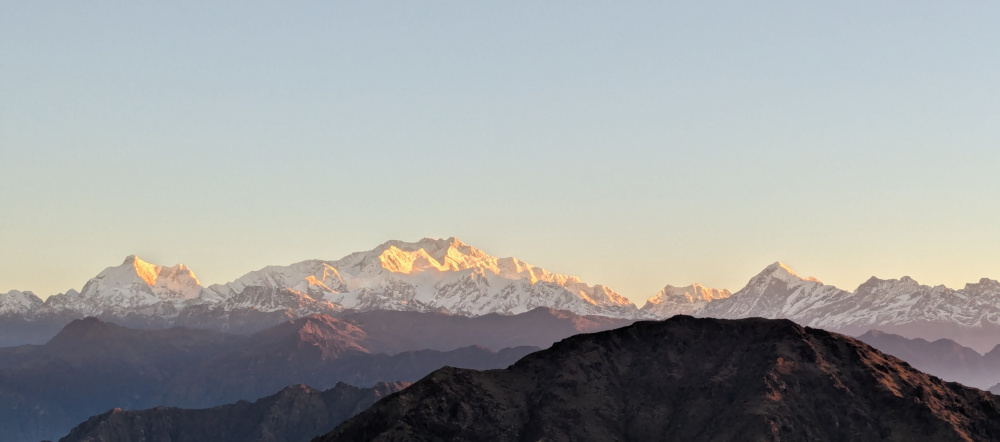
From this vantage point, we held the privilege of beholding four of the world’s five highest peaks: Sagarmatha, Kanchenjunga, Lhotse, and Makalu. They stood as a sacred quartet, silhouetted against a canvas that was slowly washing itself from charcoal into gold. The light shifting across the dawn made the landscape feel almost surreal, a place existing just outside the laws of reality.
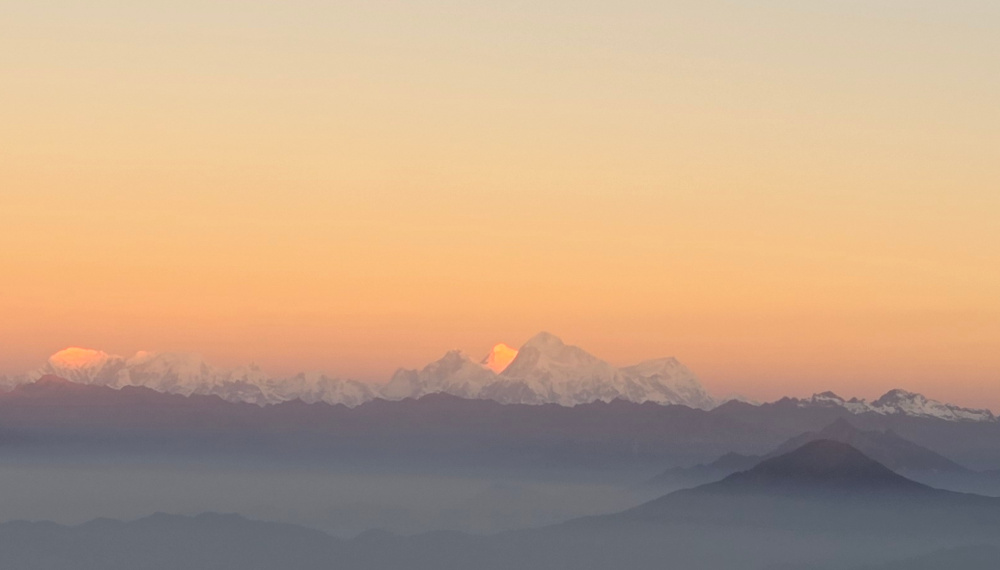
Finally, the sun crested the ridge, spilling liquid gold over the world’s tallest summits. The snow-covered peaks caught the fire, transforming the monochrome mountain range into a burning jewel before our eyes. After the exhaustion of the previous day’s climb and the discomfort of the long night, this reward felt earned in every cell of our being. Words and photographs felt suddenly inadequate; how do you capture the quiet weight of such presence on any device?
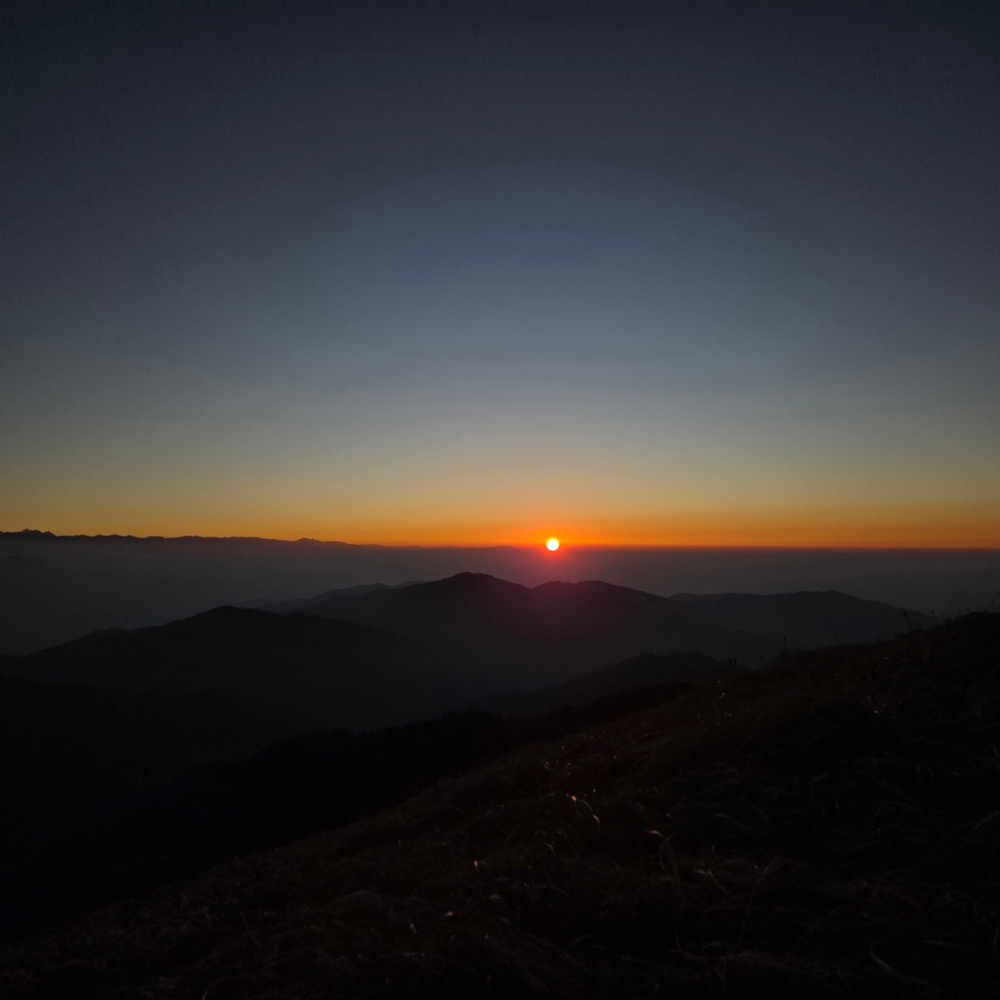
We lingered there for some time, capturing images and trying to imprint the view into our memory. Neither of us wanted to turn. But we had a long day ahead of us. The ascent had been worth every drop of energy spent, and the descent marked a new beginning. We returned to reality with memories that promised to haunt us long after the trek was officially over.
A Gentle Journey to Sabargram
The morning light had already gilded the horizon before we began our descent toward Sabargram, perched at an altitude of roughly 3,536 metres, a little lower down from the heights of Phalut. The trail wound along the mountain spines, offering us vistas so extraordinary that the physical distance between steps felt less significant. After such a spectacular sunrise, every step into the crisp morning air was a small gift.
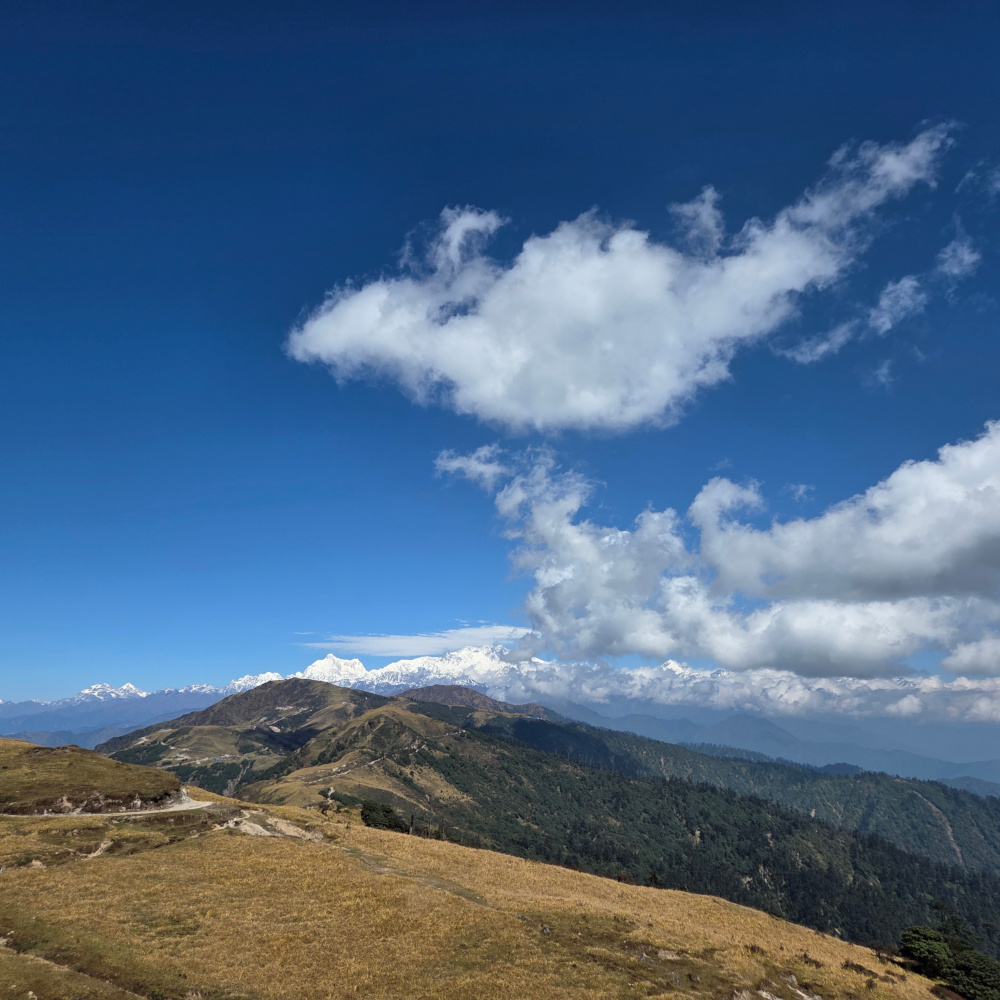
However, as our journey began, Riya’s headache also returned, its presence quiet but insistent. We learned to walk with patience that day, taking frequent breaks out of necessity. These pauses allowed her moments of rest, a necessary reprieve against the weight in her head. Though the trail itself was shorter than our previous endeavors, this discomfort made the walk more challenging than anticipated; we moved slowly, keeping to a comfortable rhythm that prioritized well-being over speed. Eventually, however, the effort yielded its reward: we reached Sabargram before lunchtime.
Once we had settled in for a meal, the demands of the trail dissolved. With no more climbing required, the afternoon belonged entirely to us and the quiet rhythm of the settlement. It was a welcome respite following the strenuous climb to Phalut. We allowed ourselves to simply soak in the serenity of the hills that surrounded our camp.
Time seemed to stretch out when it wasn't spent walking, and at one point, nature offered us an unexpected gift. A cat had decided to stake its claim among us. It was perfectly content with our company, taking turns resting on my lap and then Riya's. We laughed as the little wanderer settled into our shared warmth, creating a moment of pure serenity. It was a simple, delightful interlude in an otherwise demanding landscape—a reminder that even in the mountains, kindness finds us when we slow down.
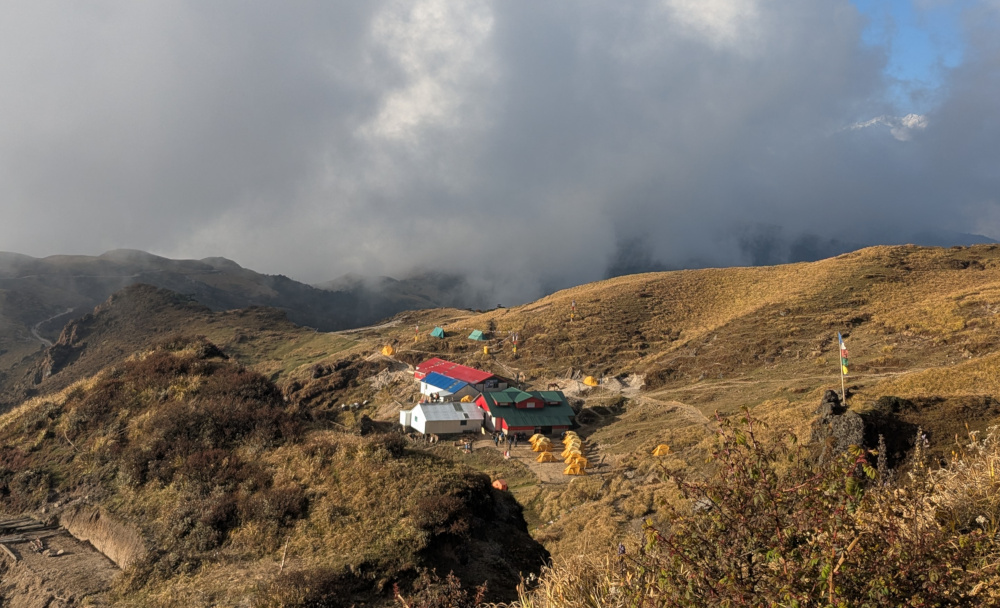
As the evening shadows lengthened, we returned to settle with tea and light snacks. This day had been quieter than its predecessor, lacking a major destination to conquer or a long climb to endure. And perhaps there is no greater victory than one of contentment. We were happy to simply exist in the present moment, resting our minds and bodies while letting the golden hours pass at their own gentle pace.
Acute Mountain Sickness
Dinner in Sabargram was supposed to be the wind-down before another day's ascent, a moment of respite after a long trek. Instead, it became the pivot point for our destiny. By the time the light had faded outside, Riya began to fade too. The fog that had been hovering around her mind returned with a vengeance; her headaches spiked, and nausea replaced appetite. She was disoriented, fragile in a way that defied her earlier strength.
When the trek leaders managed to locate a pulse oximeter to check on her vitals, the screen flashed a warning: her blood oxygen saturation was dropping. There was no room for interpretation. This was not merely altitude discomfort; it was acute mountain sickness taking hold, and it was doing so fast.
The trekking agency managed to find some acetazolamide, but pills were not enough to fight the climb we had left behind. What Riya needed was lower altitude—she needed to be taken down from the thin air into something safer. Unfortunately, Sabargram sat in a valley cut off by no road access; a car could not reach her until we made our way back to civilization first. We were trapped between the peak and the valley, with no bridge to cross.
We spent the evening dissecting our options. The only viable path forward was perilous but necessary: Riya would descend on foot to Thakum at 3415 metres the following morning, where a vehicle could evacuate her. I volunteered to accompany her, leaving the rest of the group to press forward with their journey.
It felt less like an expedition plan and more like a rescue operation. We slept fitfully that night, or perhaps not at all. The mountains outside continued to glow in their timeless, indifferent beauty under the moonlight, untouched by our fear, silent as ever. But we could not see the scenery anymore. There were no forests to walk through for the sake of discovery; there was only the narrow trail along the ridge and the weight of keeping a friend alive against the odds. We had come to Phalut for the experience of walking together, for the joy of the Himalayas, but now, all that remained was the urgent, terrifying need to get Riya home.
The Evacuation from the Mountains
Dawn broke over the silent peaks as we began the morning march toward Thakum. The rest of the group pressed forward with purpose, heading deeper toward Aal, but our path diverged there. Riya and I were to halt at Thakum and wait for evacuation, while a trekking guide accompanied us to ensure nothing goes wrong anymore.
We walked slowly, deliberately trailing behind the main group. The trail was stunning—winding serpents of rock and earth that offered phenomenal vistas of the surrounding mountains. But our minds were tethered to something far more pressing than scenery; every step was taken with a singular urgency. We just wanted to reach Thakum safely and get Riya down from the altitude as quickly as possible.
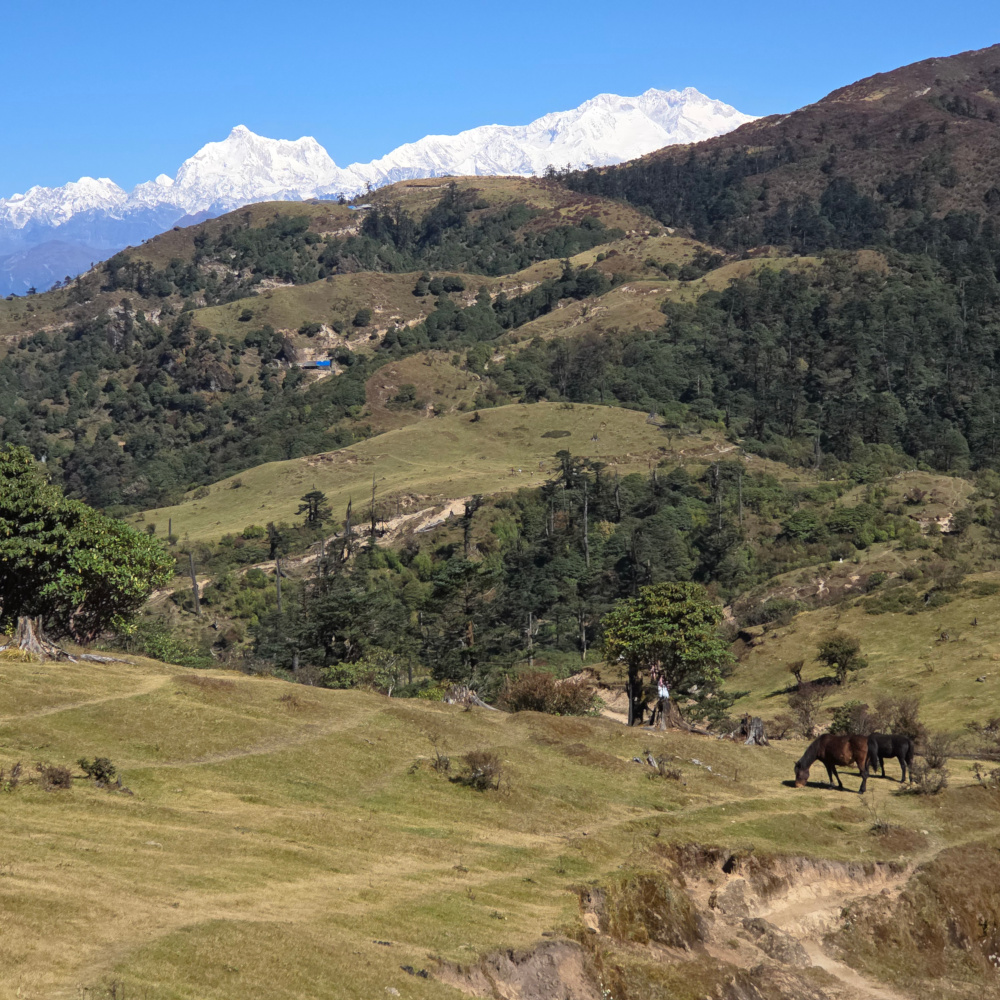
It took nearly two and a half hours to navigate the ridge and arrive at the shelter. A bed was arranged for Riya immediately, and exhaustion claimed her within moments. I remained by her side, keeping watch over her while our trek leader went to arrange transportation. Locating a vehicle in such isolation proved far more daunting than we had imagined; summoning a ride in this remote geography felt like a battle against the terrain itself. It took another four hours of waiting for everything to finally fall into place.
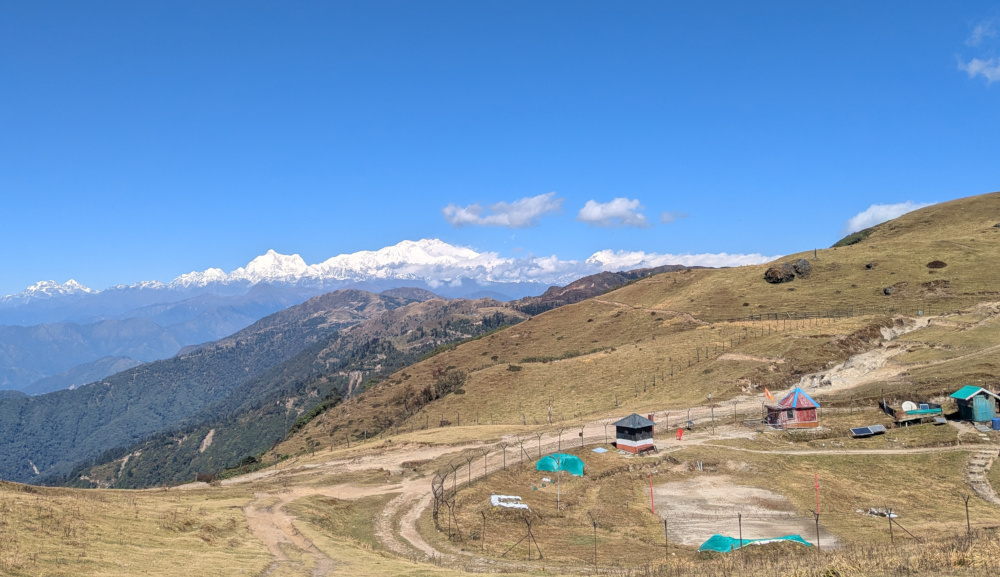
While we waited, we got a small meal from the shelter—a quiet reprieve before the descent began. Eventually, the transport was secured, and our journey downwards commenced. The first car carried us from Thakum toward Aal, where we paused for lunch, before boarding a second vehicle bound for Manebhanjyang.
Along the way, we stopped at Kalapokhri to watch the sunset. The mountains were bathed in warm evening light, painting the world in shades of amber and gold that would have been the crowning highlight of our journey under normal circumstances.
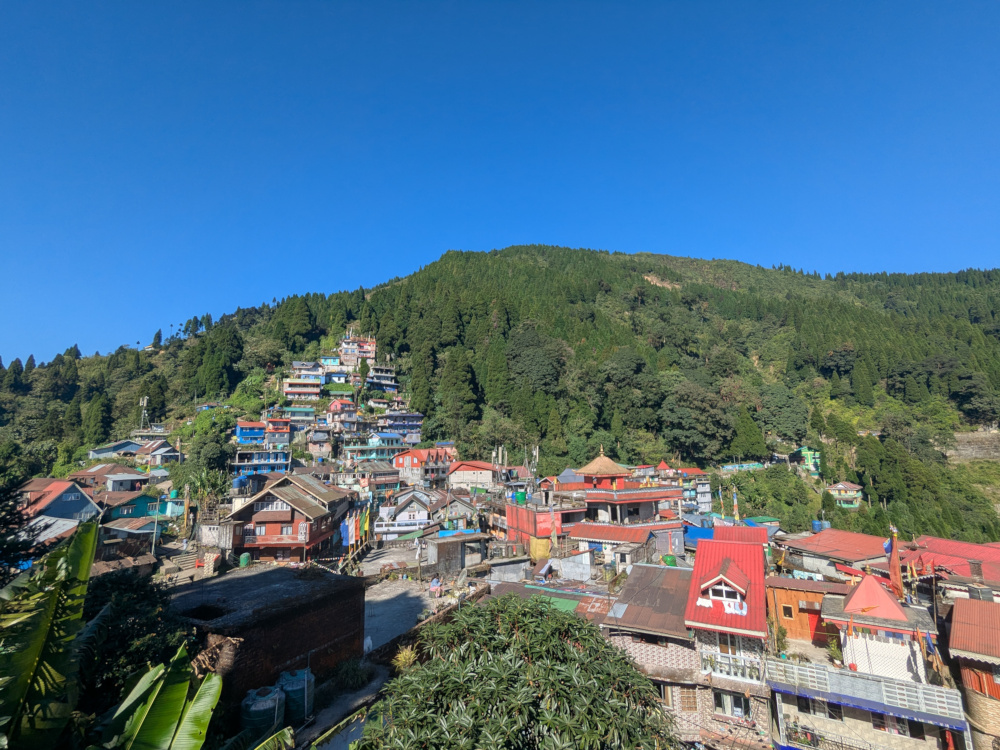
By the time we reached Manebhanjyang around 7:30 PM, the weight of the day began to lift. Fortunately, the trek guide had anticipated our need and arranged a homestay for us, sparing us the struggle of finding accommodation at the end of such a grueling ordeal. As we descended to the lower altitude of around 1,928 metres, Riya’s symptoms gradually began to recede. It was a tremendous relief to watch her spirit return and feel the pressure ease from her body.
After dinner, we retired to our room, exhausted by the long trek and the emotional toll of the day. We slept soundly, hoping that this quiet night would bring not just rest, but the much-needed respite and recovery required after everything that had happened.
A Day of Stillness in Manebhanjyang
The morning light filtering through the valley mist felt almost restorative the next day. Riya was lighter on her feet, the shadows of yesterday’s ordeal having finally receded under the weight of a gentle recovery. There were no urgent itineraries waiting for us now; instead, we made a silent pact to tread softly, allowing the rhythm of our lives to dictate the pace rather than a ticking clock.
We began where any wanderer starts: in the market. We wandered from stall to stall, fingers grazing textures of wool and wood, picking up small mementos not for their price, but for their potential memories. But by late morning, a quiet pull towards the wild urged us further. We turned our gaze toward Chitrey Monastery, nestled within Singalila National Park. The administrative hum of securing a permit was a necessary step, though we walked free of guides.
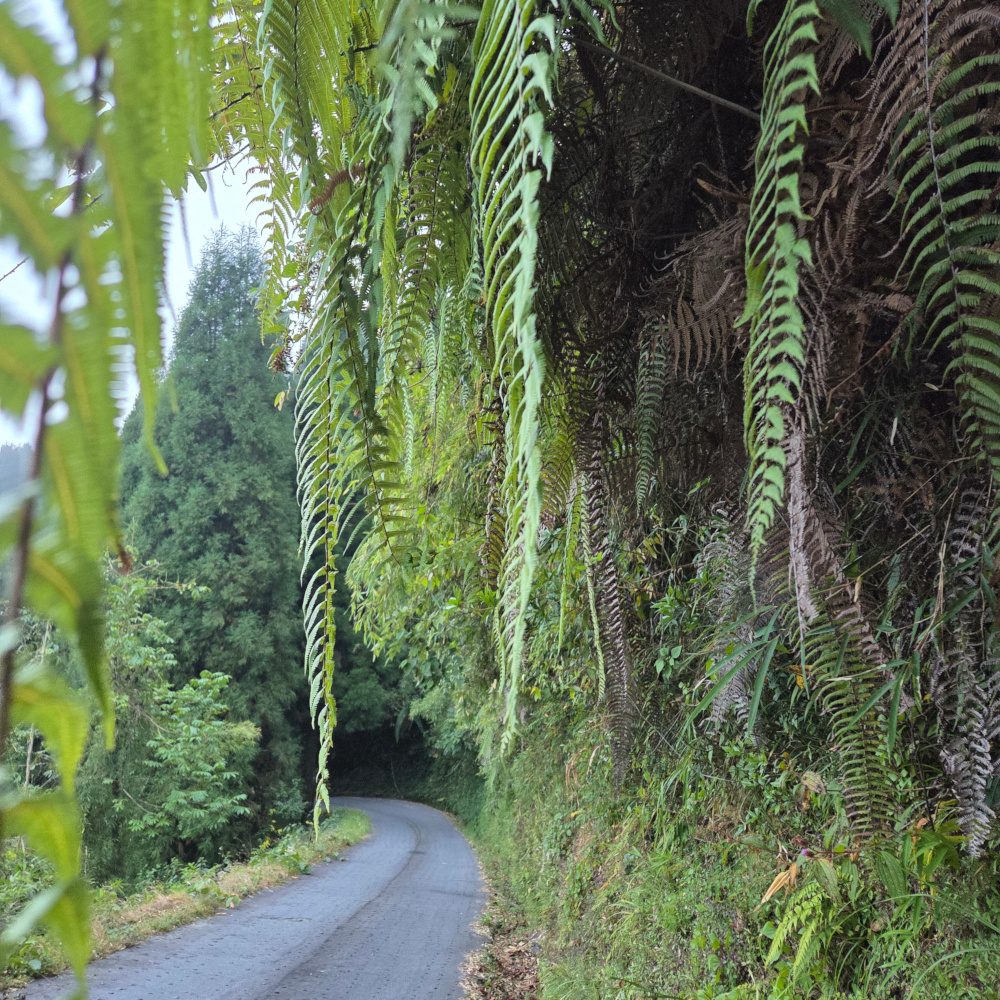
It was a lovely walk made even more precious by the fact that it was just the two of us. After those anxious days spent worrying about terrain and altitude, we were finally able to walk at our own pace, stopping whenever something caught our eye or the wind shifted direction. Eventually, the monastery came into view—a beautiful, peaceful sanctuary that seemed entirely suspended from the bustle of the worldly matters.
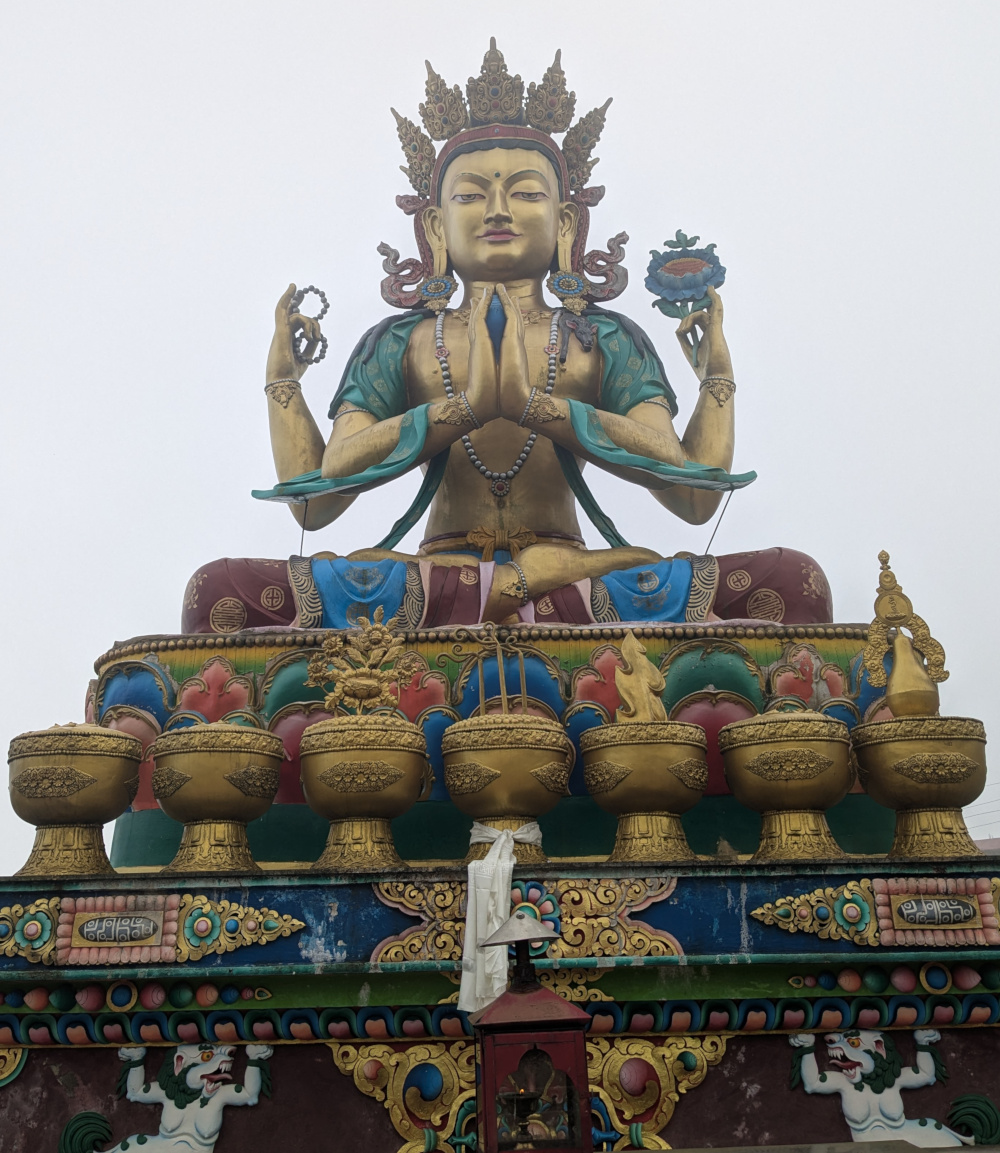
We spent a long time there, simply relaxing, chatting, and capturing photographs of the prayer flags fluttering in the breeze. Behind the monastery lay a sacred stream, its water murmuring softly against the stones. A playful dog wandered near the water, seeming particularly fond of us; it kept jumping onto our laps, adding an unexpected burst of amusement to our quiet afternoon. It was a simple, happy moment, and we sipped every second of it like a fine tea.
Seeking more warmth as the sun began its descent, we walked further to the nearby village of Chitrey. We stopped at a homestay there for a hearty meal before turning back towards Manebhanjyang. By the time we reached the town, daylight was beginning to fade into twilight, yet we were not quite ready to call it a day. We ventured out once more to explore the evening market, sampling local food and wandering through the hum of conversation until we happened upon a trek guide with whom we struck up an unexpected conversation. It was one of those pleasant, unplanned encounters that make travelling so enchanting—meeting strangers who become part of your story for a while.
Eventually, it was time to return to our homestay for dinner and some much-needed sleep. After the worries of the previous days, there was a profound sense of restoration in having spent an entire day simply exploring, eating, walking, and enjoying each other's company without ever worrying about the trail ahead. We had found peace, for a while at least.
The Journey Back
The following morning was our day for departure. By then, the rest of the group had already made their way from Aal down to Srikhola, preparing to retrace their steps toward Siliguri over the winding roads. One of our trek leaders came through in the morning, organizing a transport that would carry us from Manebhanjyang and bring us safely out of the valley.
On our way down, we paused at Gopaldhara for lunch. It was a moment of pure relief to spot the rest of the group again; seeing everyone once more felt like stitching a patch onto our map after an unexpected divergence in the mountains. We spent those final hours in the hills buying tea from the tea estate, taking one last quiet breath of the mountain air before turning back toward the plains.
Reaching Siliguri offered a different kind of respite there. Riya and I met with one of my closest friends, whose presence cut through the fatigue like fresh sunlight. After the physical toll of the trek and the chaotic turns of the journey, that familiar face felt like a grounding anchor. We shared some time together before heading for the bus back to Kolkata.
Lessons from the Mountains
When we finally look back upon the journey to Phalut, the memories present a duality that is both beautiful and haunting. There were the verdant forests of Singalila range stretching endlessly in the distance; the quiet, sleepy villages of Samanden and Gorkhey where time seemed to slow down; and the sunrise over the Sleeping Buddha that remains etched in my soul as one of nature’s most serene spectacles. Yet, woven into these vivid memories is a shadow—the frightening stillness that fell upon us when Riya fell ill at altitude, forcing us to abandon our original plans to ensure she could be carried safely down the mountain.
If we distill this experience into a single lesson, it is that one must never underestimate the mountains. They do not negotiate with human fitness or enthusiasm; they are indifferent forces that can strike trekkers regardless of preparation. Acute Mountain Sickness (AMS) is not an inconvenience to be shrugged off. It is a warning siren that demands immediate attention. The headache, dizziness, nausea, and confusion that plagued us at altitude were not mere discomforts; they were cries for help. We were fortunate to have the time we had to organize an evacuation, and more fortuitous still that Riya’s condition improved as we descended. It was a narrow escape made possible by her ultimate recovery.
The incident weighed heavily on our conscience because, upon our return, we learned of two other fatalities in the Singalila region within the preceding month. While I have not independently verified the specifics of those cases, the reports were chilling and served as a grim reminder that an enjoyable trek must never be purchased at the cost of safety. We realized then that acclimatisation, vigilance regarding symptoms, and the humility to turn back are far more valuable badges than any summit reached.
Through it all, we cannot thank Himalayan Passion, our trek leaders Saikat Das and Shirshendu Maji and our guide Nima Awseng enough for their support during the evacuation. Organizing transportation from such a remote altitude was a logistical labyrinth they navigated with grace under pressure. They worked tirelessly to keep us comfortable throughout the ordeal, making an impossible situation feel manageable. We deeply appreciate their efforts in helping us get safely off the mountain when we needed it most.
Of course, the trek did not end as we had originally planned. Sandakphu remained unconquered; our journey concluded sooner than anticipated. Yet, despite this twist of fate, the experience has not diminished our desire to return to these peaks. If anything, it has sharpened our understanding of what such journeys truly demand from us.
Riya and I are determined to return to the Singalila range one day and finally reach Sandakphu. One day, we will walk those ridges again and stand together at the summit we were forced to leave behind. Next time, we intend to finish what we started.
 RSS Feed

Write a comment: