There’s something about the mountains that keeps calling you back—quietly, persistently—until you give in.
This was my second trek, and I wasn’t looking for anything too ambitious. Between clinical work and unpredictable schedules, getting leave is never easy. Long breaks are rare, and when they do come, they feel too precious to waste. So this time, the plan was simple: find a short, meaningful escape that could fit into a long weekend.
The Good Friday break in 2026 felt like the perfect opportunity.
I didn’t want the stress of planning everything from scratch, so I went with Himalayan Passion—a decision that made things surprisingly seamless. With logistics taken care of, all that was left was to show up and walk.
What I didn’t expect was how a simple weekend plan would turn into something far more memorable than I had imagined.
Getting to Okhrey: The Journey Begins
Every trek really begins long before your first step on the trail.
Mine started with an overnight train from Kolkata to New Jalpaiguri—a familiar route for anyone heading into the Eastern Himalayas. There’s something quietly exciting about these journeys: falling asleep in the plains and waking up closer to the mountains.
At NJP, I met our trek guide Sriparna Pal and the rest of the team. Strangers for now, but as with most treks, you know that won’t last long.
From there, we began the long drive toward Okhrey, entering Sikkim via NH 10. The road traced the restless flow of the Teesta River at first, and later the quieter, winding stretches of the Rangit River.
It was a tiring journey—long hours, winding roads—but never dull.
We stopped at Jorethang for lunch, a small but lively town that felt like a midpoint between the plains and the hills. Somewhere along the way, we also pulled over at a tiny roadside stall to try something local—rhododendron juice, or guras as it’s called. Sweet, slightly tangy, and incredibly refreshing, it felt like our first real taste of the mountains.
By the time we finally reached Okhrey, it was already past 4 PM. The air was cooler, the pace slower, and the mountains felt close enough to touch.
We checked into Ama Homestay—a cozy, welcoming place that instantly made us feel at home. After a long day of travel, it was exactly what we needed: warmth, comfort, and the quiet anticipation of the trek that would begin the next morning.
An Evening in Okhrey: First Glimpse of the Mountains
Okhrey doesn’t try to impress you immediately—it slowly grows on you.
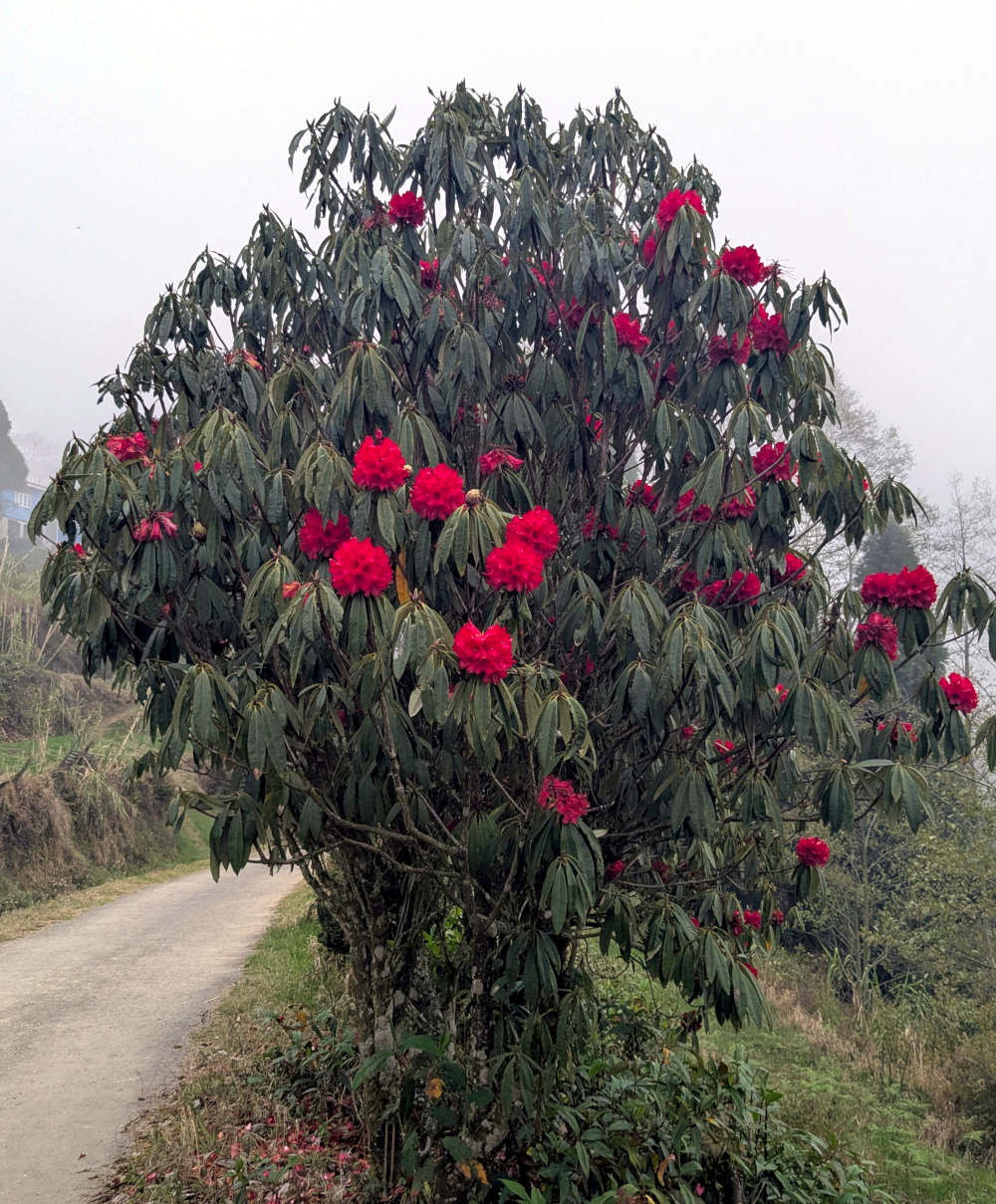
After a brief rest at the homestay, we headed out in the afternoon to explore a nearby spot known for its rhododendron blooms. And almost instantly, it felt like we had stepped into a different world.
The flowers were everywhere.
Bright reds, soft pinks, and occasional whites—clusters of rhododendrons in full bloom, almost too vibrant to feel real. We spent a long time just wandering around, taking it all in. Naturally, that also meant taking a lot of photos—of the flowers, of the landscapes, and of ourselves trying (and failing) to do justice to the scenery.
It was also here that I got acquainted with the excellent photography skills of my fellow co-traveller Riya Das—an avid solo traveller herself—who took great care in capturing some wonderful photos of me. I didn’t realize it then, but her eye for detail would end up preserving some of my favorite memories from the trip, all the way till the very end.
At some point, we stopped by a small local shop and tried guras again—the local rhododendron juice. It felt fitting, drinking something made from the very flowers we had just been admiring.
Not everything went smoothly though.
Somewhere between the excitement and photo sessions, I managed to lose the keys to my homestay room. A brief moment of panic followed, but thanks to our trek guide, the situation was quickly sorted and the keys were recovered—crisis averted.
Back at the homestay, the evening settled in quietly. We had some warm snacks, followed by a short briefing from the guide—what to expect, how to pace ourselves, and a reminder that this trek was as much about enjoying the journey as reaching the destination.
By 9 PM, we were all fast asleep after dinner.
The excitement of the day, the long journey, and the anticipation of the trek ahead—it all came together, and sleep came easily.
Hilley to Varsey: Walking Through a Living Forest
The next morning began early, with a quiet sense of anticipation.
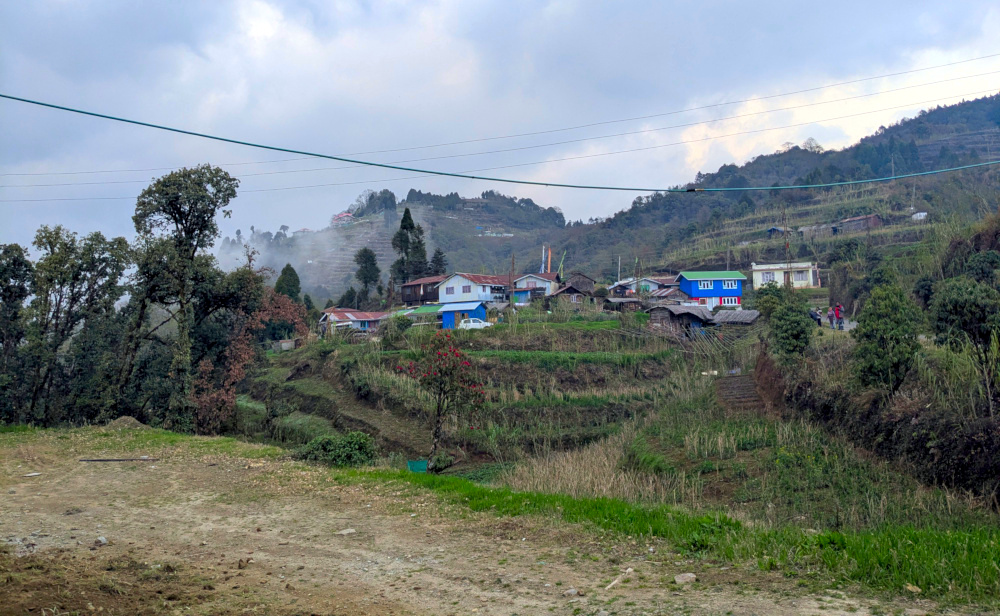
After a quick breakfast at the homestay, we drove up to Hilley, the starting point of the trek, and by around 9 AM, we were finally on foot.
The trail began gently.
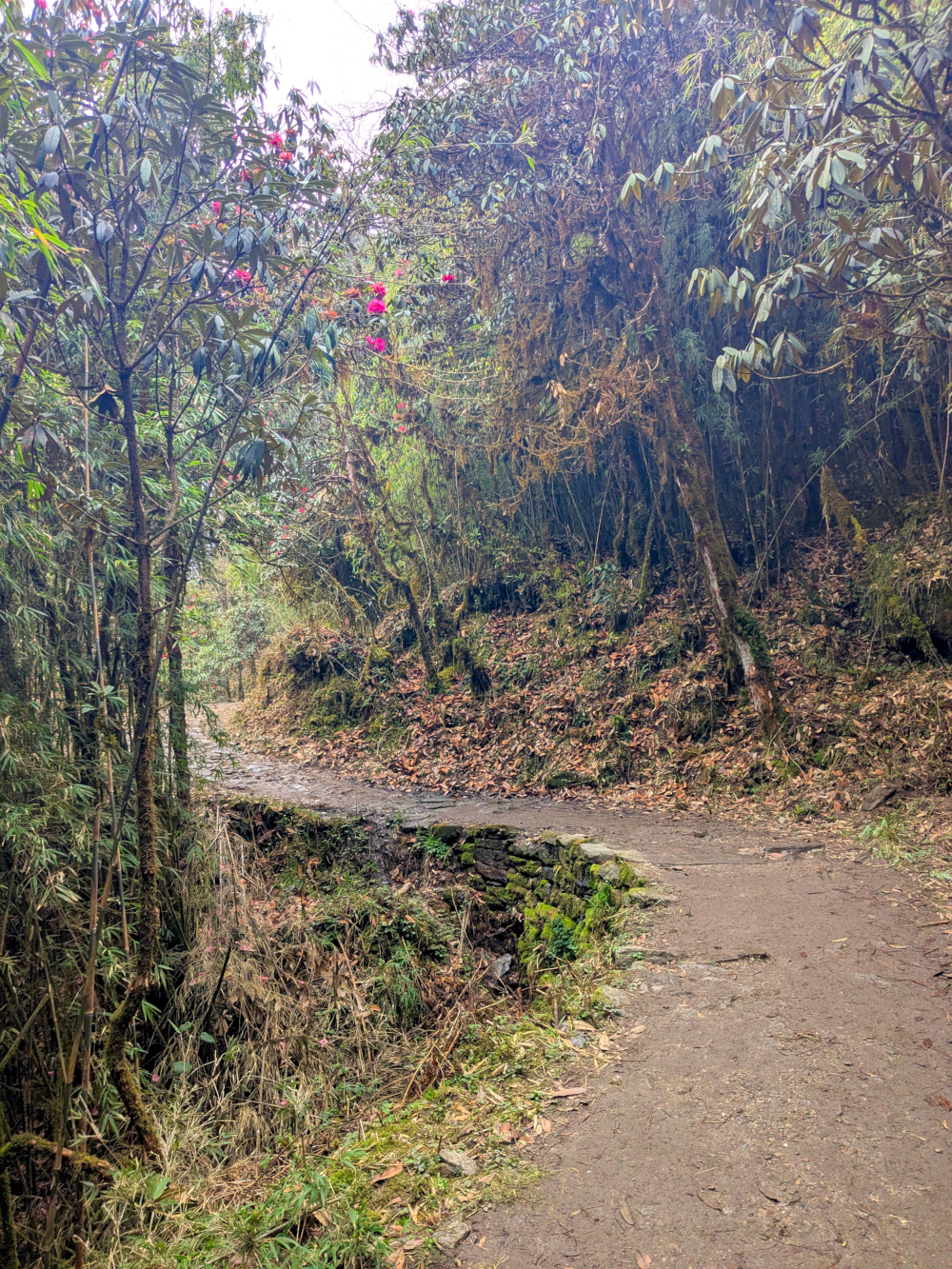
This wasn’t a demanding climb—just a steady walk with minor ups and downs, making it feel more like a long, immersive nature walk than a strenuous trek. Almost immediately, we found ourselves surrounded by dense rhododendron forest.
Even though it was peak bloom season, the effects of bad weather from the previous days were visible—many flowers had fallen and carpeted the ground. But if anything, that only added to the charm.
It felt like walking through a painting.
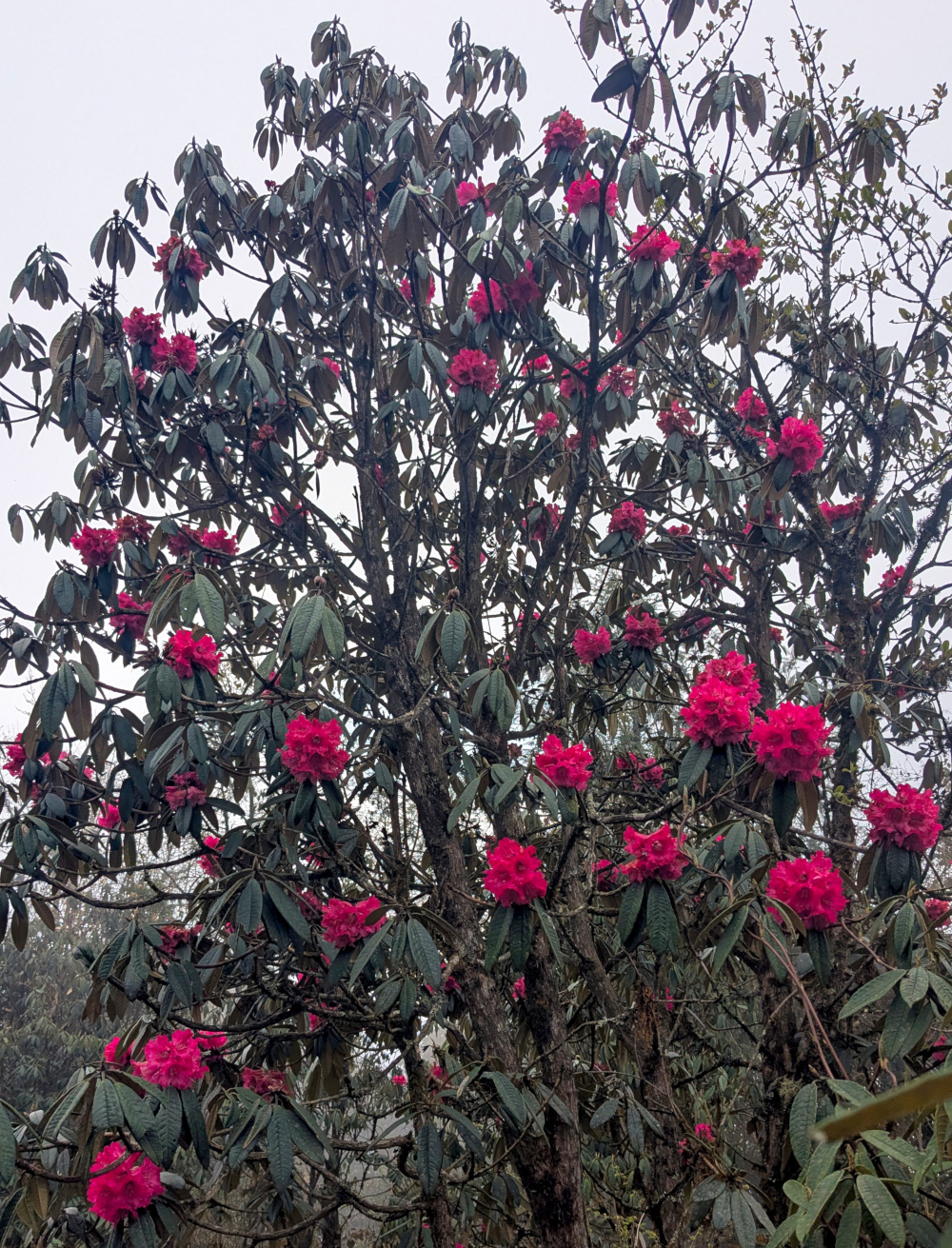
Rhododendrons lined the trail—on the trees above us and scattered across the forest floor below. Sunlight filtered softly through the canopy, creating shifting patterns of light and shadow. The occasional chirping of birds blended with the chatter of fellow trekkers, giving the trail a lively, almost festive atmosphere rather than a silent one.
The trail was quite crowded at times, and there were moments when we had to pause and let groups pass. While it took away a bit from the solitude one might expect in the mountains, it also added a shared energy—people from different places, all drawn here by the same fleeting bloom.
By around 1 PM, we reached the end of the trail at Guras Kunj, a small guest house nestled within a wide meadow. The open space felt like a contrast to the enclosed forest trail—bright, expansive, and full of blooming rhododendron trees.
It was beautiful, though noticeably crowded.
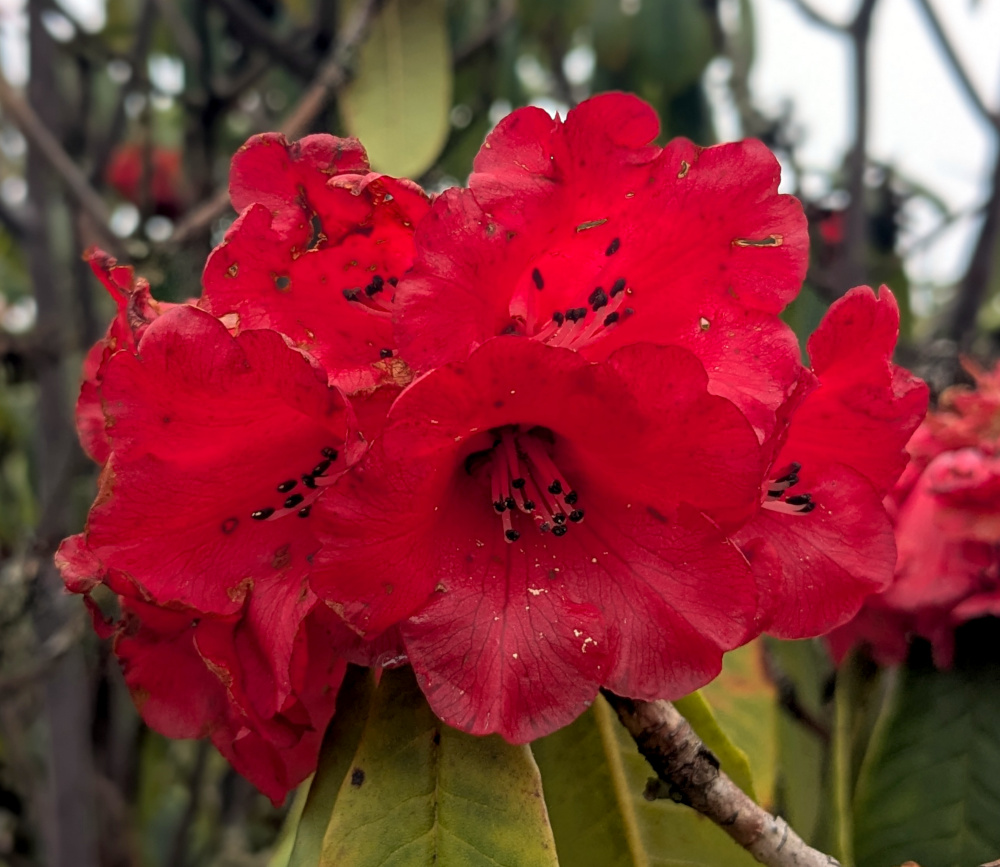
We spent some time wandering around, soaking in the views, and of course, taking more photos. After a well-deserved lunch there, it was time to head back.
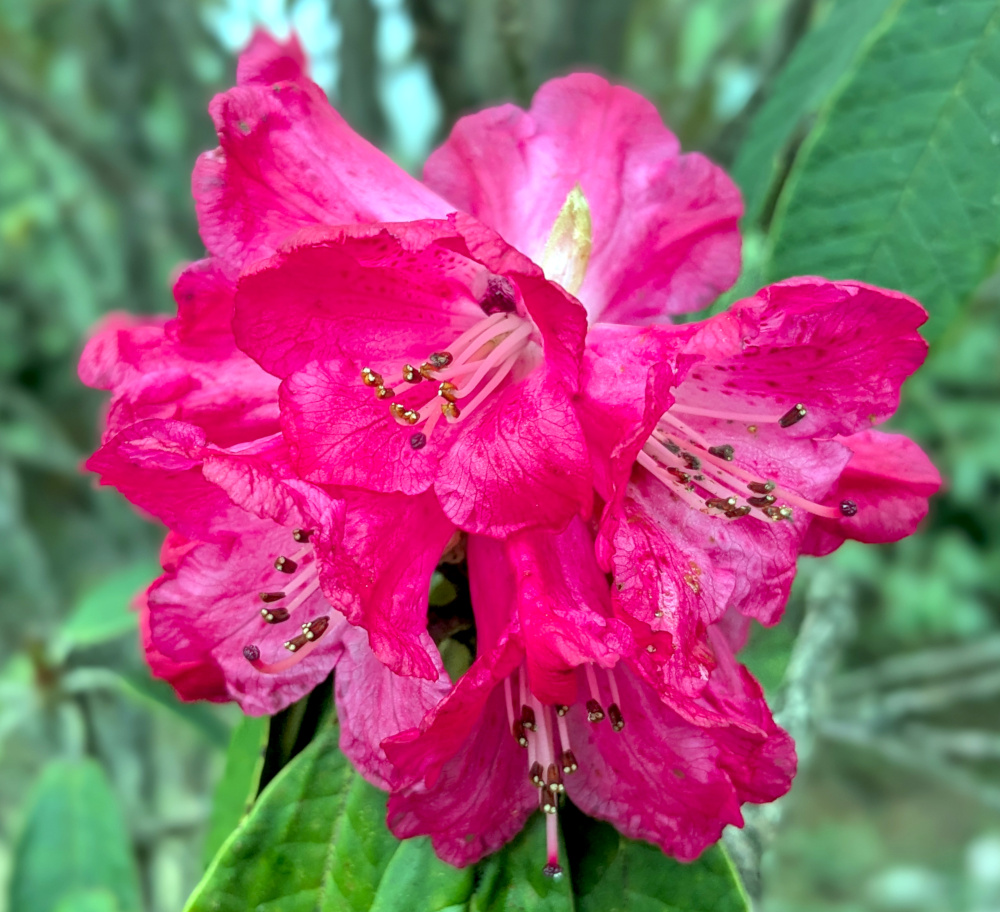
The return journey followed the same trail, but like all treks, it felt slightly different on the way back—more familiar, more reflective.
By around 4 PM, we were back at the road head, ready to drive back, carrying with us the quiet satisfaction of a day well spent in the mountains.
A Quiet Detour: Okhrey Monastery
Later that afternoon, while most of the group chose to rest, two of my co-travellers and I decided to explore a nearby monastery in Okhrey.
It was just a short walk away, but what made it special was the sudden shift in atmosphere. Away from the busier parts of the village, the path felt quieter, almost secluded—like we had stepped into a different rhythm altogether.
When we reached, we found that the main monastery building was still under construction. Instead, activities were taking place in a smaller structure beside it—simple, unassuming, yet deeply peaceful.
We stayed there for a while, watching a few very young monks playing instruments, completely absorbed in their own world. There was something quietly beautiful about that moment—no ceremony, no grandeur, just a glimpse into everyday life in the monastery.
After the relative bustle of the trek earlier in the day, this felt like a pause.
We didn’t speak much while we were there.
And we didn’t need to.
After spending some quiet, peaceful time at the monastery, we slowly made our way back, carrying with us a different kind of memory—not of landscapes or trails, but of stillness.
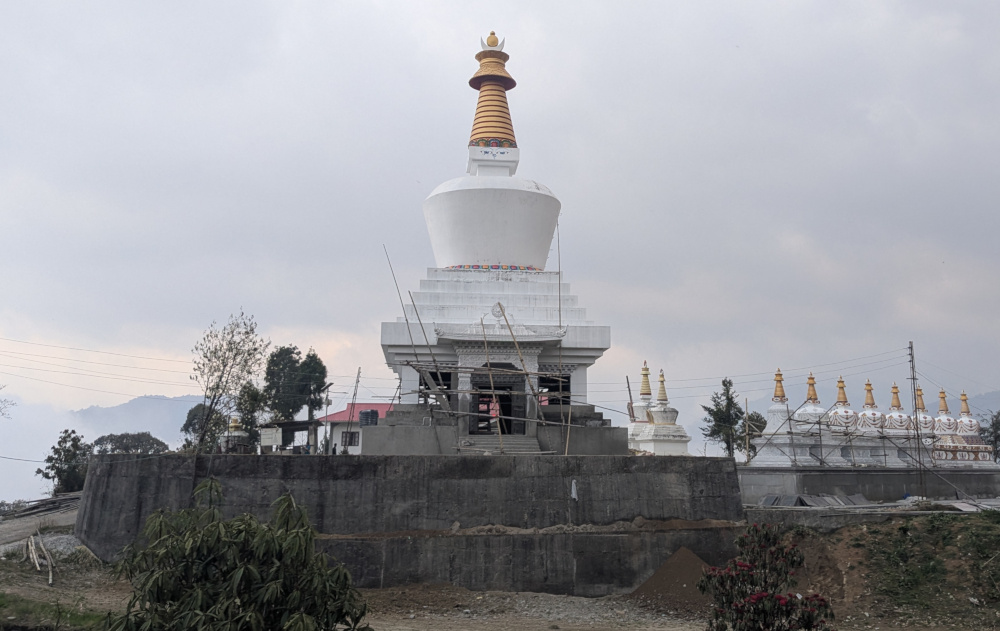
Bhareng to Gorkhey: Into Quiet Wilderness
The next morning, we left the homestay at Okhrey with our bags packed, ready for what felt like the real trek of the trip.
A short drive took us to Bhareng, the starting point for the trail to Gorkhey. This time, there was a noticeable shift in mood—we weren’t just heading out for a walk; we had a proper trek ahead of us.
From the forest outpost at Bhareng, we began on foot, rucksacks on our backs.
The trail opened with a mix of short but slightly steep ascents and descents, before settling into a long, steady downhill stretch. And almost immediately, one thing stood out—it was quiet.
Unlike the previous day, there were no crowds here.
The forest felt deeper, older. Massive trees lined the trail, their canopies stretching high above us. Occasionally, small streams cut across our path, forcing us to pause, step carefully, and move on. If you stopped and stayed still for a moment, you could hear it—the soft, scattered chirping of birds echoing through the woods.
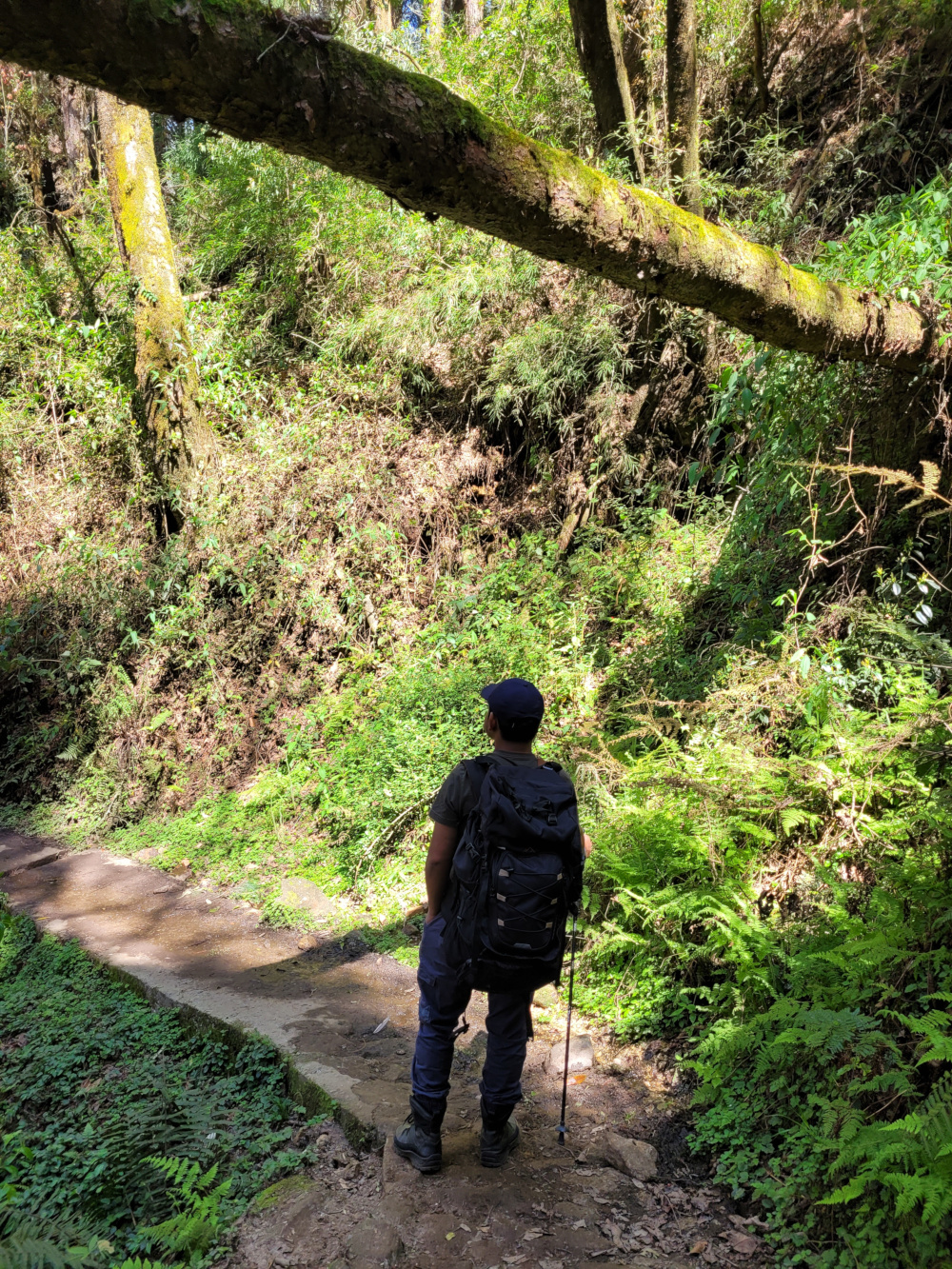
This was, without a doubt, the highlight of the entire trip.
There was something raw and untouched about this trail. No distractions, no noise—just you, the forest, and the rhythm of your own footsteps.
After a long descent, the forest slowly began to open up.
And then, almost suddenly, we arrived at the meadow surrounding Gorkhey.
A beautiful mountain river flowed through it, its gentle but constant roar filling the valley. It wasn’t overwhelming—just enough to remind you of its presence, something steady and timeless.
We followed the trail through the meadow, walking alongside the river, taking in the wide open space after hours within the forest. Eventually, we reached a small bridge—the entrance into Gorkhey.
On the other side, we were welcomed by wildflowers scattered across the ground and clusters of wild strawberry plants growing along the path.
It felt like arriving somewhere hidden.
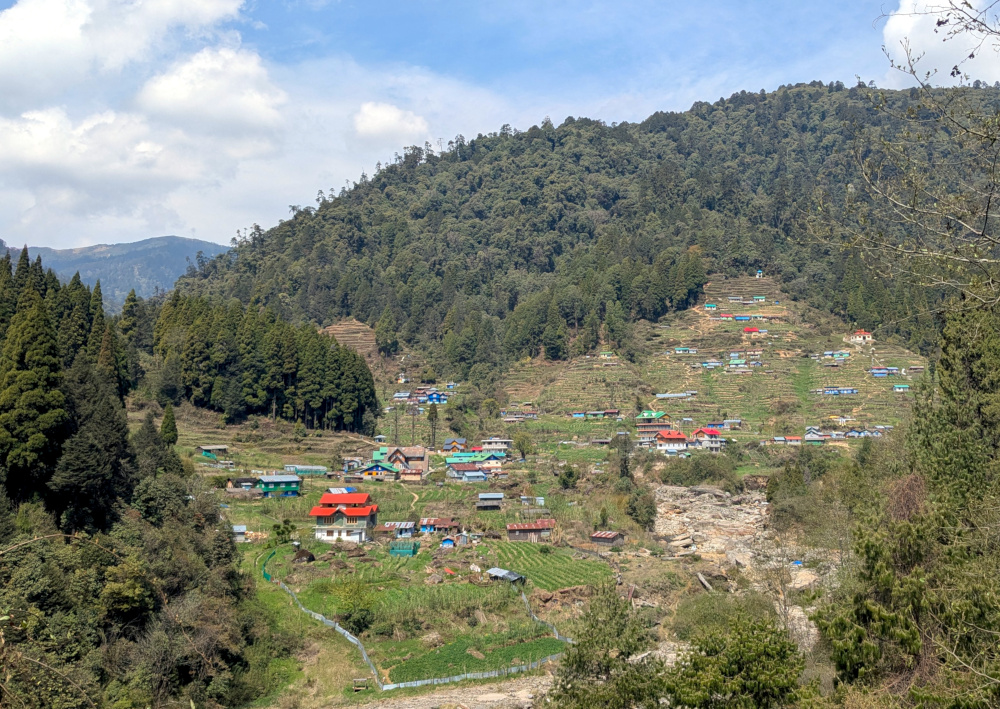
Gorkhey: Where Time Slows Down
Reaching Gorkhey felt like stepping into a hidden world.
We settled into a cozy homestay—simple, warm, and perfectly in tune with the surroundings. But rest could wait. The moment we dropped our bags, we headed straight out to explore.
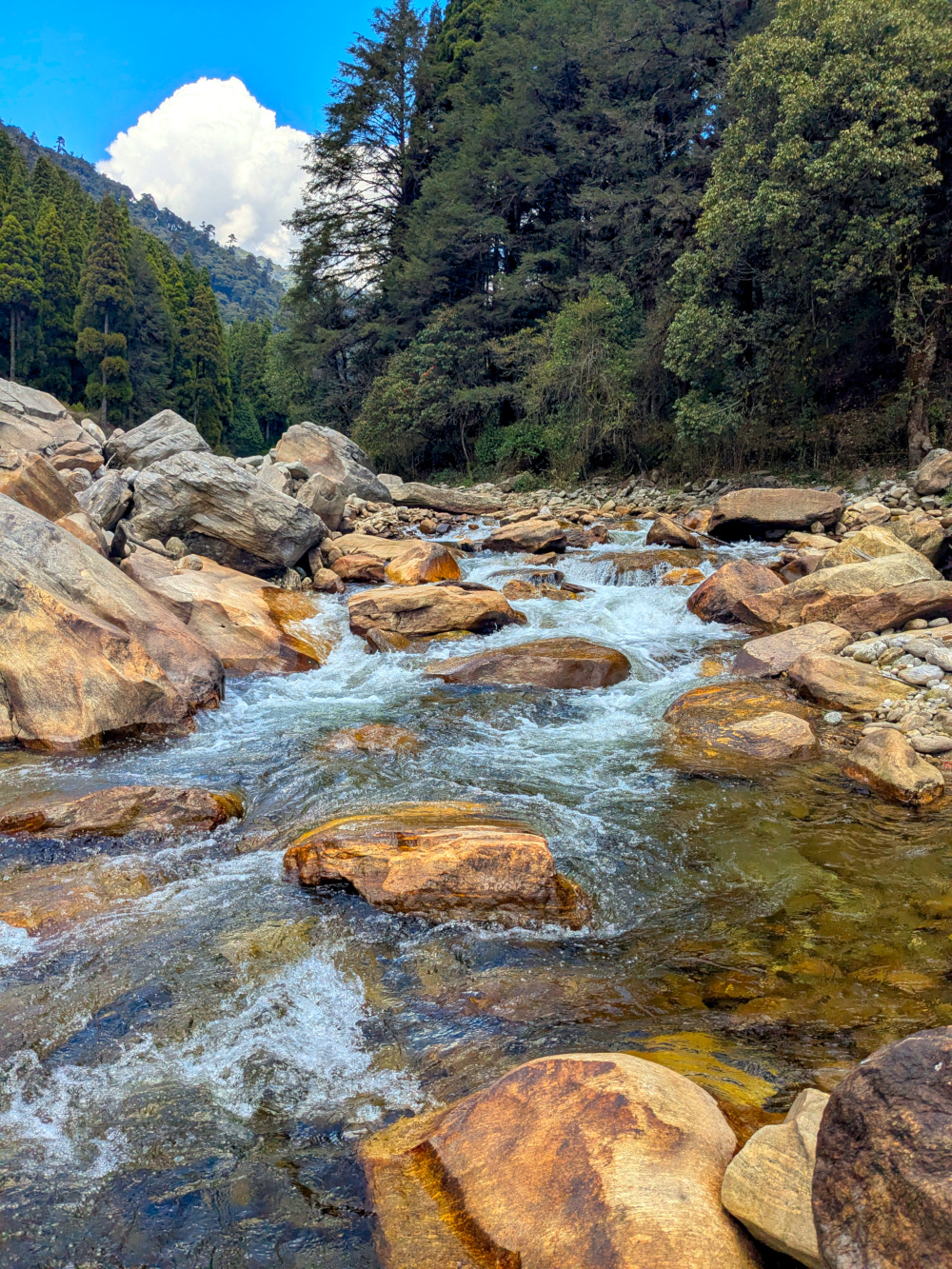
The first stop was the bridge we had crossed to enter the village. From there, we wandered a little upstream, stepping onto the large river rocks scattered across the stream. It was the kind of place that makes you pause without realizing it—massive boulders around you, clear water rushing past, and the steady sound of the river filling the air.
We spent a long time there, doing nothing in particular—just sitting, watching, and taking it all in.
Later, Riya and I decided to explore further on our own, heading toward another bridge on the far side of the village. But instead of taking the easy route, we chose to cross the river ourselves—jumping from rock to rock, testing our balance with each step.
It was slightly awkward, occasionally risky, but incredibly fun—perhaps because of that very awkwardness.
After making it across, we eventually reached the bridge and found ourselves completely alone. No voices, no movement—just the two of us, the river, and the mountains quietly surrounding us.
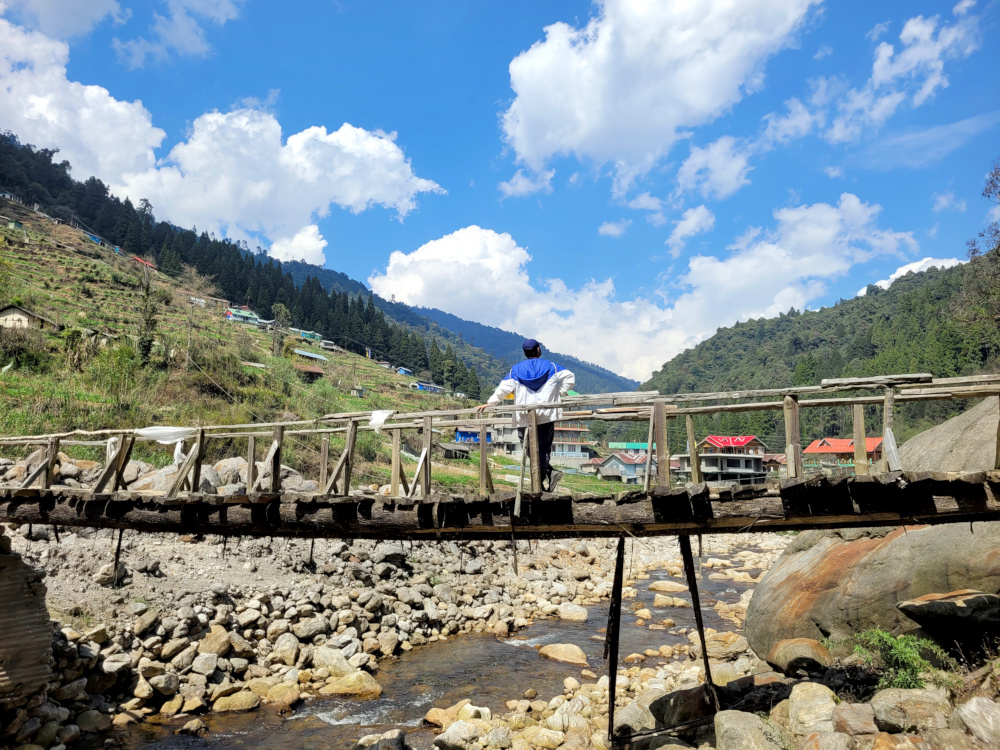
It was one of the rare moments of complete solitude on the trip.
We might have stayed there even longer, but eventually our trek guide came looking for us—making sure we didn’t end up missing lunch entirely.
Reluctantly, we made our way back.
But a part of us stayed behind, by that river.
Gorkhey to Samanden: A Walk into Quiet Beauty
After lunch, just when the body was beginning to crave rest, we decided to head out again—this time toward a nearby village called Samanden.
Crossing the second bridge from Gorkhey, we entered a forest that felt immediately different—quieter, deeper, almost untouched. The trail began with a gentle climb, winding its way through dense greenery.
It was an easy walk, but one that demanded your attention.
Rhododendron blooms appeared occasionally along the way, adding bursts of color to the otherwise deep green surroundings. Birds called out from somewhere within the trees, their songs echoing softly through the forest. There was something undeniably magical about this stretch—unhurried, immersive, and deeply calming.
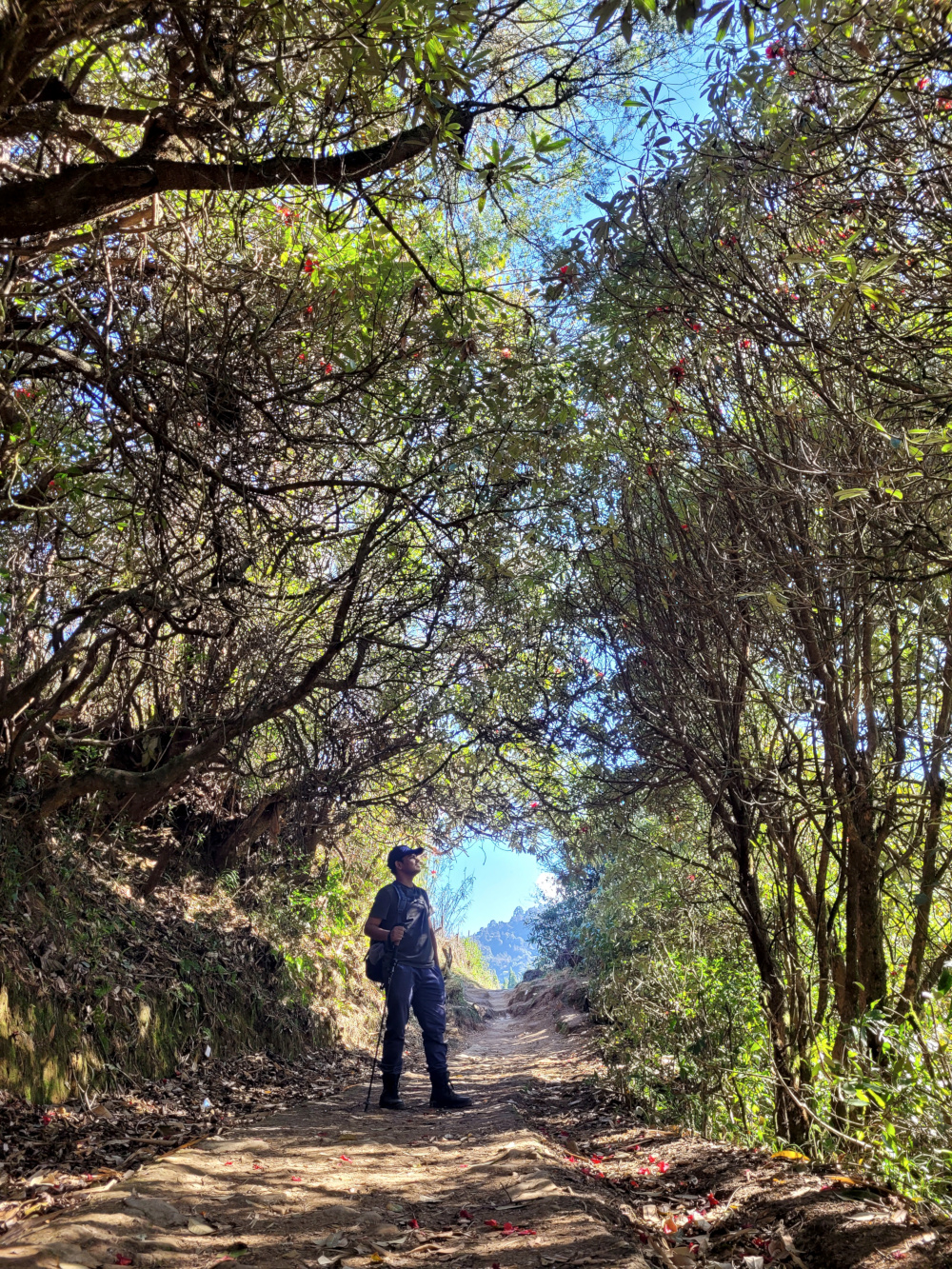
And then, the forest opened up.
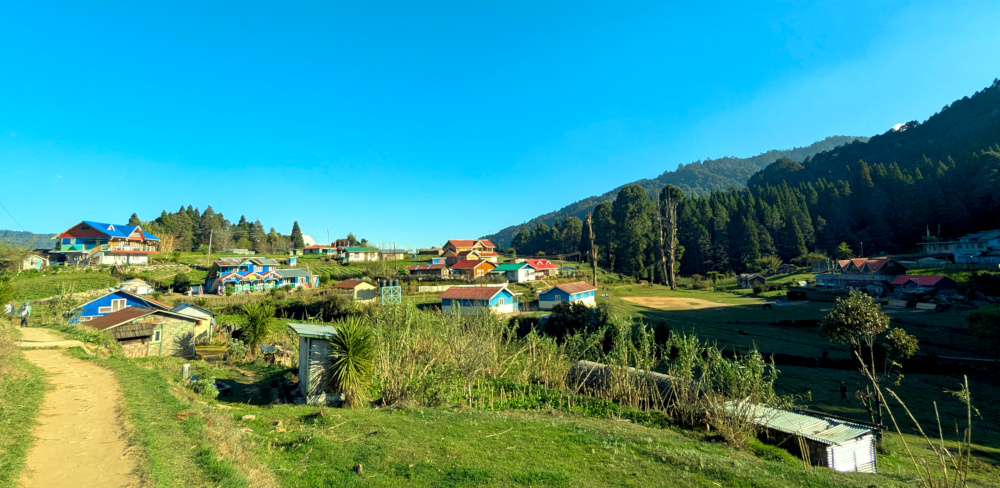
We stepped into the vast meadow surrounding Samanden.
It felt expansive and free, a contrast to the enclosed forest trail. There were a few people scattered around, but for the most part, it felt like it was just us and the landscape.
Horses grazed lazily across the meadow. A few dogs ran around playfully, occasionally coming up to us for a quick pat before darting off again. Everything moved at its own pace here.
We spent a long time simply being there—walking aimlessly, sitting down, taking in the views. At one point, we even wandered a little beyond the village, back into the forest, just to see where the trail might lead.
But the mountains have their own sense of time.
As evening began to set in and the light slowly softened, we knew it was time to head back. Reluctantly, we turned around, leaving behind the quiet charm of Samanden, carrying with us yet another moment that felt too fleeting.
Evening in Gorkhey: Fire, Cold, and Quiet Moments
Evenings in Gorkhey arrive gently—but once the sun dips, the cold settles in quickly.
That night, we decided to make it a little special. With the help of our homestay host, we arranged for a small campfire—an add-on that turned out to be one of the most memorable parts of the trip.
We gathered around the fire, its warmth cutting through the mountain chill. Conversations flowed easily—stories, laughter, small reflections from the day. There were snacks, shared casually, and at some point, even a friendly village dog decided to join us, quietly becoming part of the group as we offered it bits of food.
It was simple, but perfect.
As the night deepened and the air grew colder, the fire became more than just a source of warmth—it was the center of everything, holding us there just a little longer.
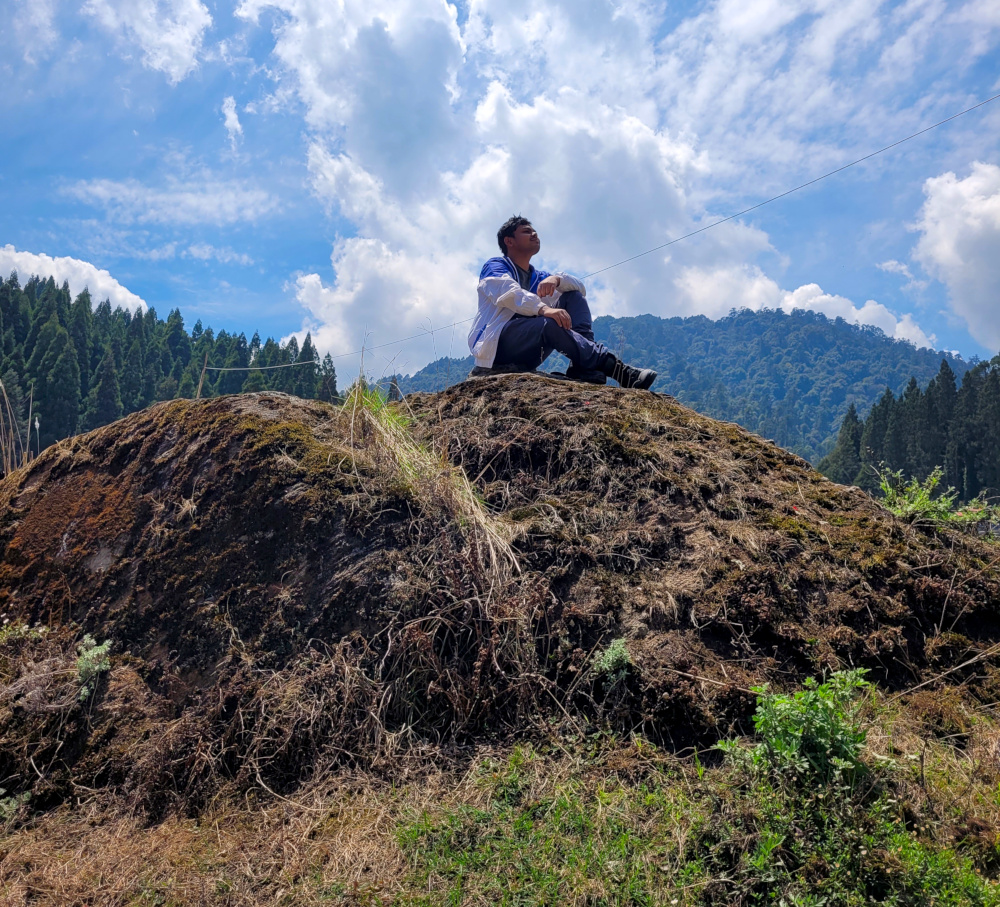
Eventually, as the flames began to fade, a few of us wandered toward the large boulder that sits at the heart of the village. Climbing on top of it, we sat in the dark, looking up, trying to catch glimpses of stars scattered across the sky.
There was a stillness to that moment—no rush, no noise, just the quiet of the mountains at night.
But like everything on this trip, even that had to end.
Dinner was ready, and with it came the reminder that the next day would bring another climb. One by one, we headed back, leaving behind the dying embers of the fire, and settling in for the night—falling asleep to the gentle, constant roar of the river flowing through the valley.
The Return: Climbing Back, Holding On
The next morning began early.
We packed our bags, took one last look at Gorkhey, and started walking—crossing the familiar bridge, traversing the meadow, and stepping back onto the trail we had descended the previous day.
This time, though, it felt different.
There was a quiet mix of peace and sadness—peace from the time spent in the mountains, and sadness from having to leave it all behind so soon.
The climb back up followed the same forest path, but now it was uphill—steady, sometimes demanding, but still beautiful in its own way.
Riya and I found ourselves moving at a quicker pace, eventually reaching the end of the trail well ahead of the others. After waiting there for a while, I decided to head back down the trail to look for the rest of the group.
Partly to check on them.
But also, if I’m being honest, as an excuse to stretch the trek just a little bit longer.
Walking that familiar path one more time—without urgency, without destination—felt like a small gift before it all ended. Soon enough, I met the rest of the team and walked back up with them, bringing the journey to its natural close.
From the forest outpost, we boarded our vehicle and began the long drive back to New Jalpaiguri.
The mountains slowly faded behind us.
And just like that, it was time to return—to routines, responsibilities, and everyday life.
Final Thoughts
Some journeys stay with you not because they were grand, but because they felt real.
This trek wasn’t the most difficult, nor the most remote—but it had something quieter, something deeper. In just a few days, it offered forests, rivers, solitude, laughter, and moments of stillness that felt rare and unforced.
For a brief period, it gave me exactly what I didn’t know I needed—a pause.
And long after returning, a part of me is still there, somewhere between the trees, the trails, and the gentle sound of that river.
 RSS Feed
Write a comment: