Our legs were already beginning to ache, and every upward step seemed to demand a little more effort than the one before it. We had been climbing for some time, and the easy trek we had imagined was beginning to look rather different.
It was supposed to be a brief, single-day trek to the top of the Parasnath Hills and back. We had not expected any great difficulty. There was no elaborate preparation, no complicated itinerary—just a plan to spend a day walking up a hill and return by evening. The hill, as we soon discovered, had other plans.
The trip was also significant for another reason. It was the first time Riya and I were travelling entirely on our own. We had planned the journey ourselves, figured out the logistics, and set off without being part of a larger group or depending on anyone else to organise the trip.
It was a short journey, but it turned out to be rather more strenuous than we had bargained for.
The Journey to Madhuban
We took the Howrah–Bikaner Express from Howrah to Parasnath. It was around four in the morning when we reached Parasnath station. The station was still quiet at that hour, and after getting off the train, we took a shared cab to Madhuban, where the trek began.
In retrospect, we probably should have left our bags in the cloakroom at the station before setting out. Carrying them up the hill was not something we had anticipated would be particularly troublesome at the beginning, but the weight soon became noticeable. Fortunately, we had brought trekking poles with us. We did not think too much of them when we packed them, but once the climb began, they proved to be extremely useful.
There was, of course, another way of getting to the top. Motorbikes regularly carried pilgrims and visitors up the hill, making it possible to reach the summit without walking the entire route. For us, however, they were more of a nuisance than an alternative. The bike operators kept approaching us and offering rides throughout the trek, despite our making it quite clear that we intended to walk. There is also a helipad at the top, and we heard that helicopter services are available as well, although we did not see any helicopters during our visit.
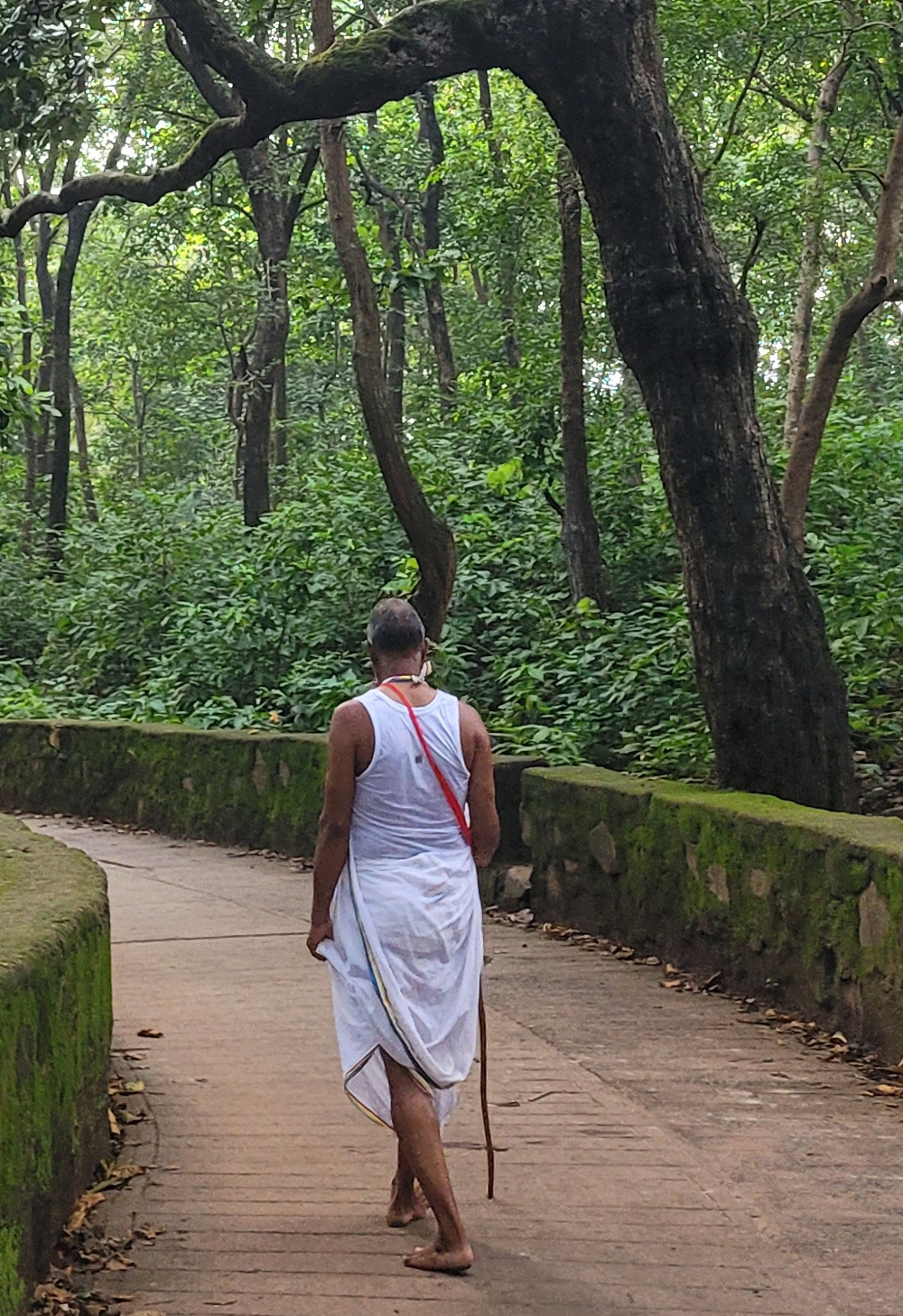
There were also more traditional options. Dulis, carried by human bearers, were available for those who did not want to make the climb on foot. The trail itself was filled with pilgrims, many of them Jain devotees. We saw large numbers making the entire climb barefoot, some dressed in traditional white garments. Watching them make their way steadily uphill gave the trek a character quite different from that of an ordinary hike.
The Climb Begins
We started our climb from Madhuban with plenty of energy and enthusiasm. The trail was beautiful, winding its way through the hills under a green canopy of trees. The coolness of the early morning and the quiet surroundings made for a pleasant start to the trek.
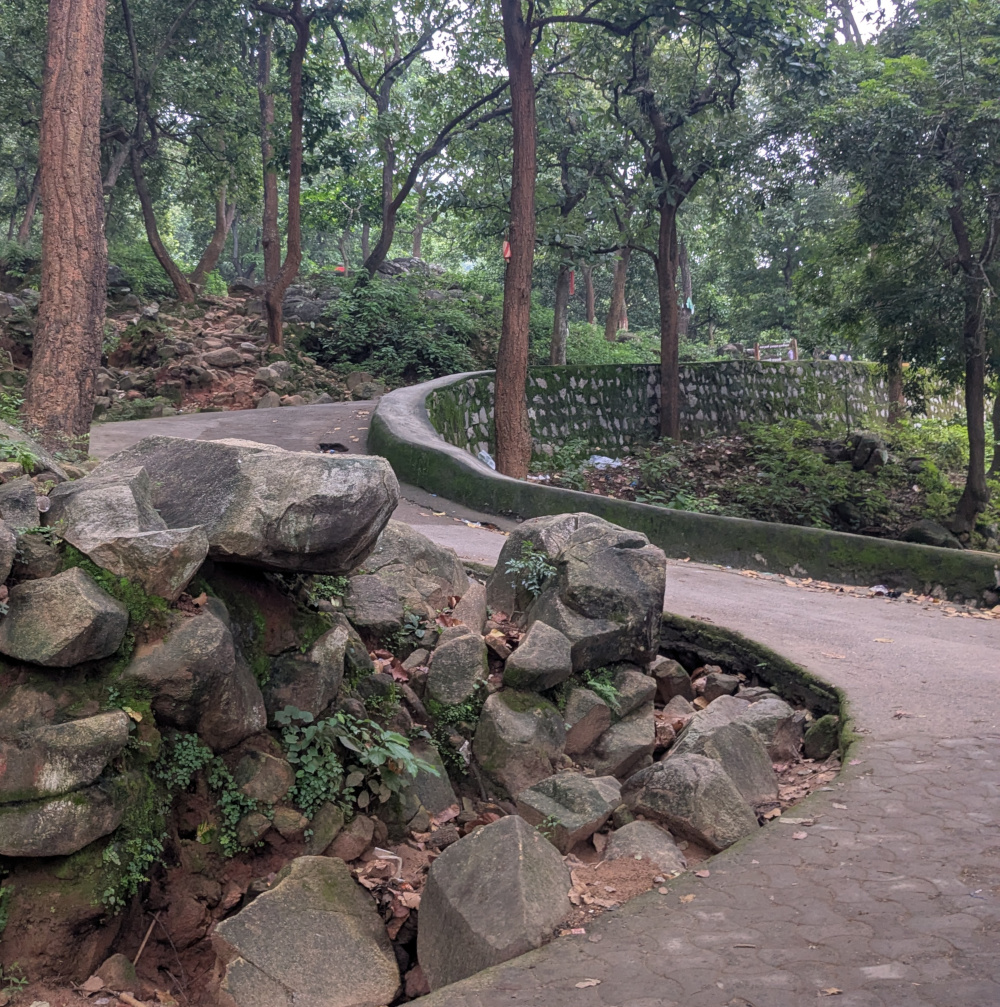
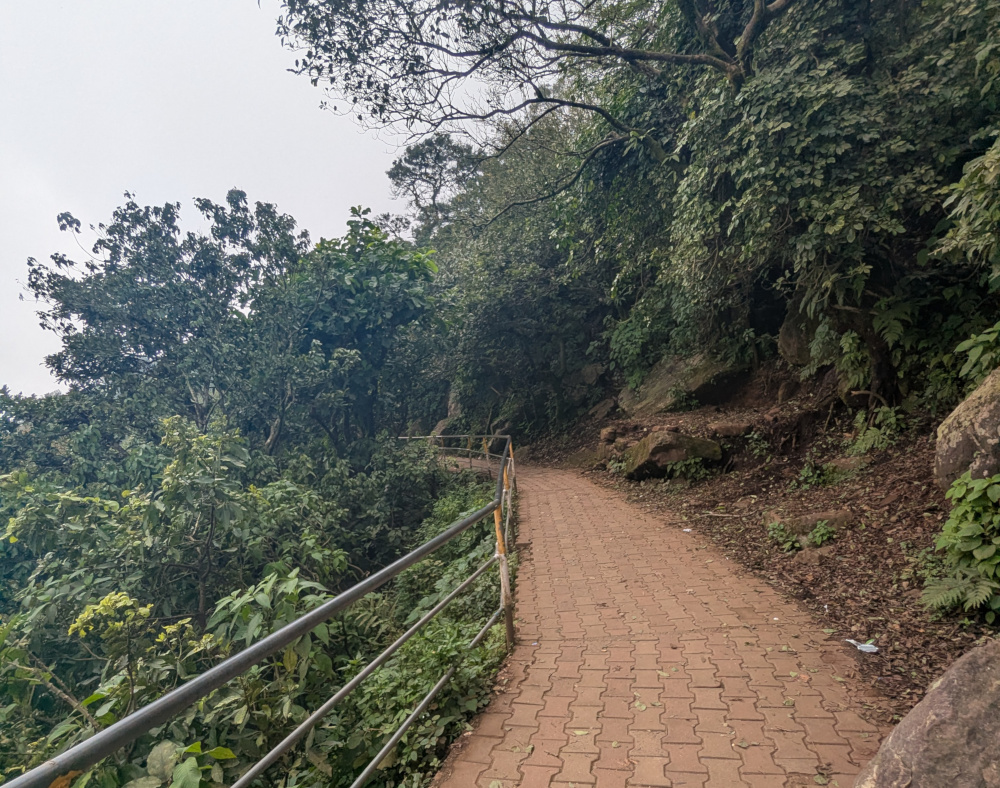
The main trail was paved for much of the way, though there were frequent rocky shortcuts connecting different sections of the road. We took these whenever they seemed interesting, enjoying the change of terrain from the paved route.
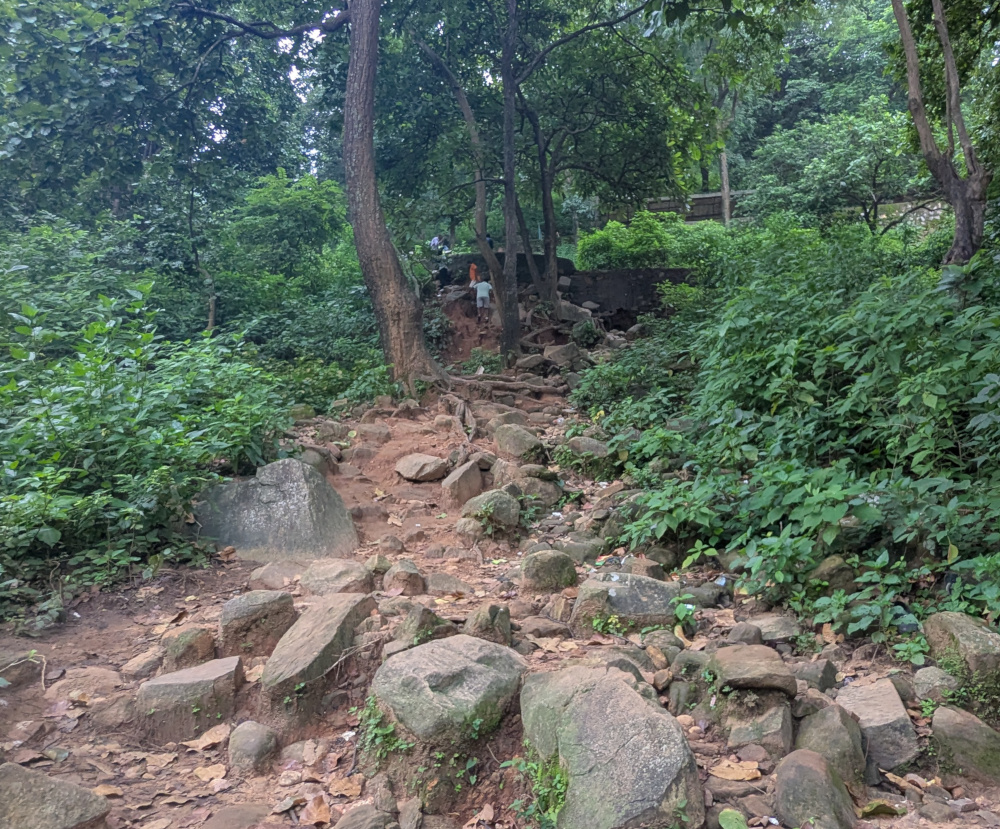
For the most part, the early morning walk was serene. The only interruption came from the occasional bike operators, who would appear again and offer us a ride to the top. We had already made our decision, but apparently that was not enough to discourage them.
We were in no particular hurry. We walked slowly, stopping frequently to take photographs and occasionally pausing for a snack. There were small shrines scattered along the route, as well as a few temples, adding to the character of the trail. Frequent signboards carried snippets of Jain religious wisdom, while posters put up by the Forest Department offered information and reminders about the surrounding forest. At one place, we noticed several trees, each tied individually with red threads, surrounding a stone placed in the centre. It seemed to be a small worship spot. Together, these details made the trail feel like a curious mix of pilgrimage route and forest path.
There was plenty to notice along the way. We spotted some black mushrooms growing beside the trail, and at one point a butterfly settled briefly on Riya's hand. We were also fascinated by a truly gigantic tree standing beside the road. It was the sort of tree that made us stop simply to look at it, dwarfed as we were by its enormous trunk and sprawling branches.
At every opportunity, we stopped to look around and appreciate the landscape—the trees, the rocky slopes and the changing views through the canopy.
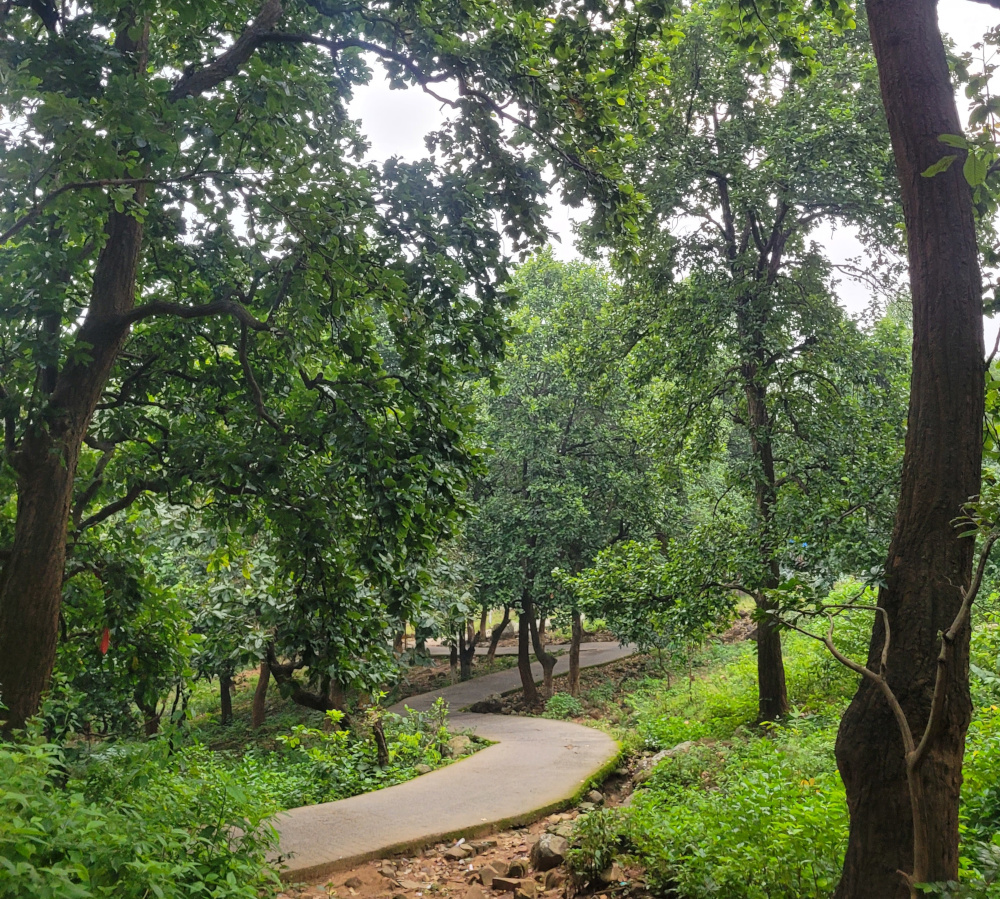
At this point, the trek still felt much like the easy outing we had imagined.
The Climb Gets Steeper
The trail had been steep from the very beginning, but as we climbed higher, the effort began to catch up with us. Our legs had started to ache, and every step required a little more determination. We continued upwards with the help of our trekking poles, stopping occasionally to catch our breath and cheering each other on whenever the climb began to feel particularly tiring.
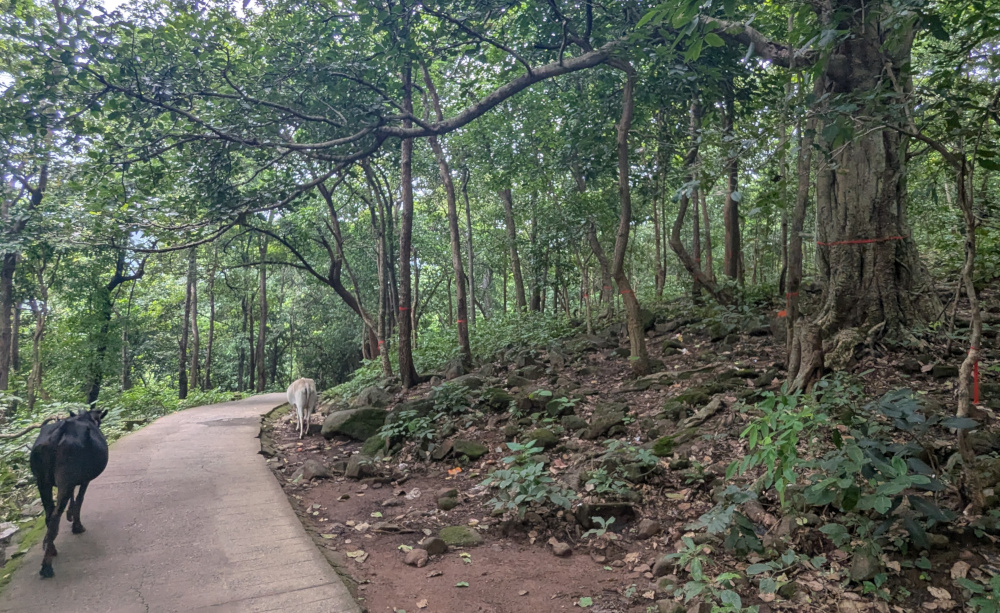
There were some unexpected companions along the way. We came across a group of cows, and one of the black ones walked up to me and stood patiently enough to let me boop her nose. She and a white cow then continued alongside us for some distance, almost as if they had decided to keep us company and assure us that we were on the right track.
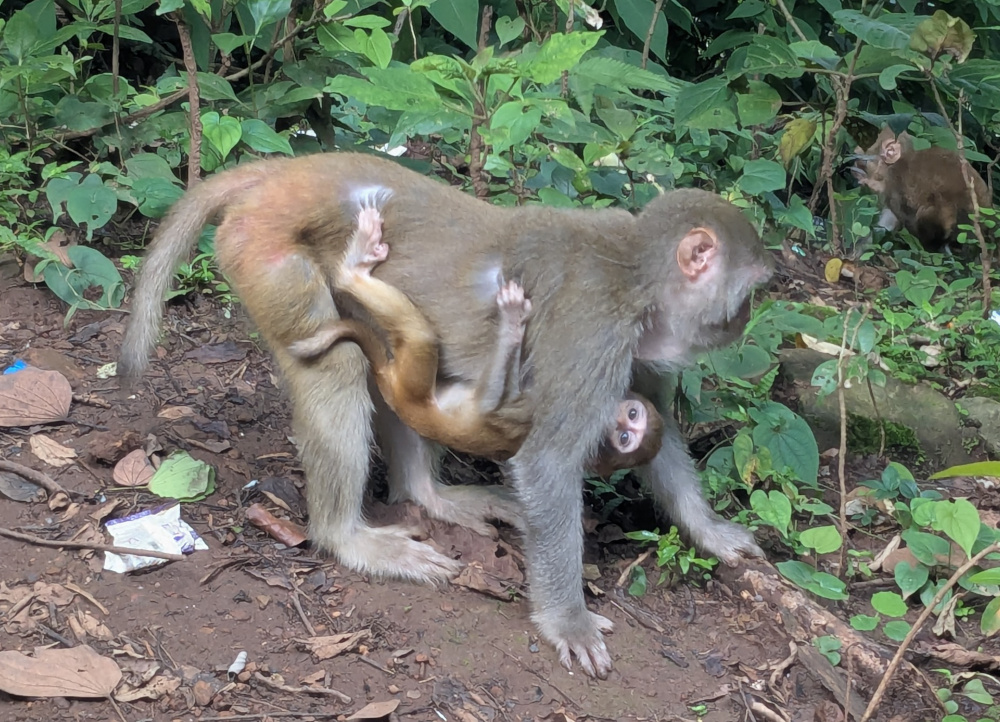
The monkeys soon became a more frequent presence. At first we noticed them in the canopy, but before long they were appearing by the side of the road as well. Some carried their babies, while others seemed to be guarding the group, occasionally trying to intimidate passing humans. A few were clearly more interested in mischief, making attempts to steal food from the pilgrims. They generally kept a respectful distance from us, though, and were mostly entertaining to watch.
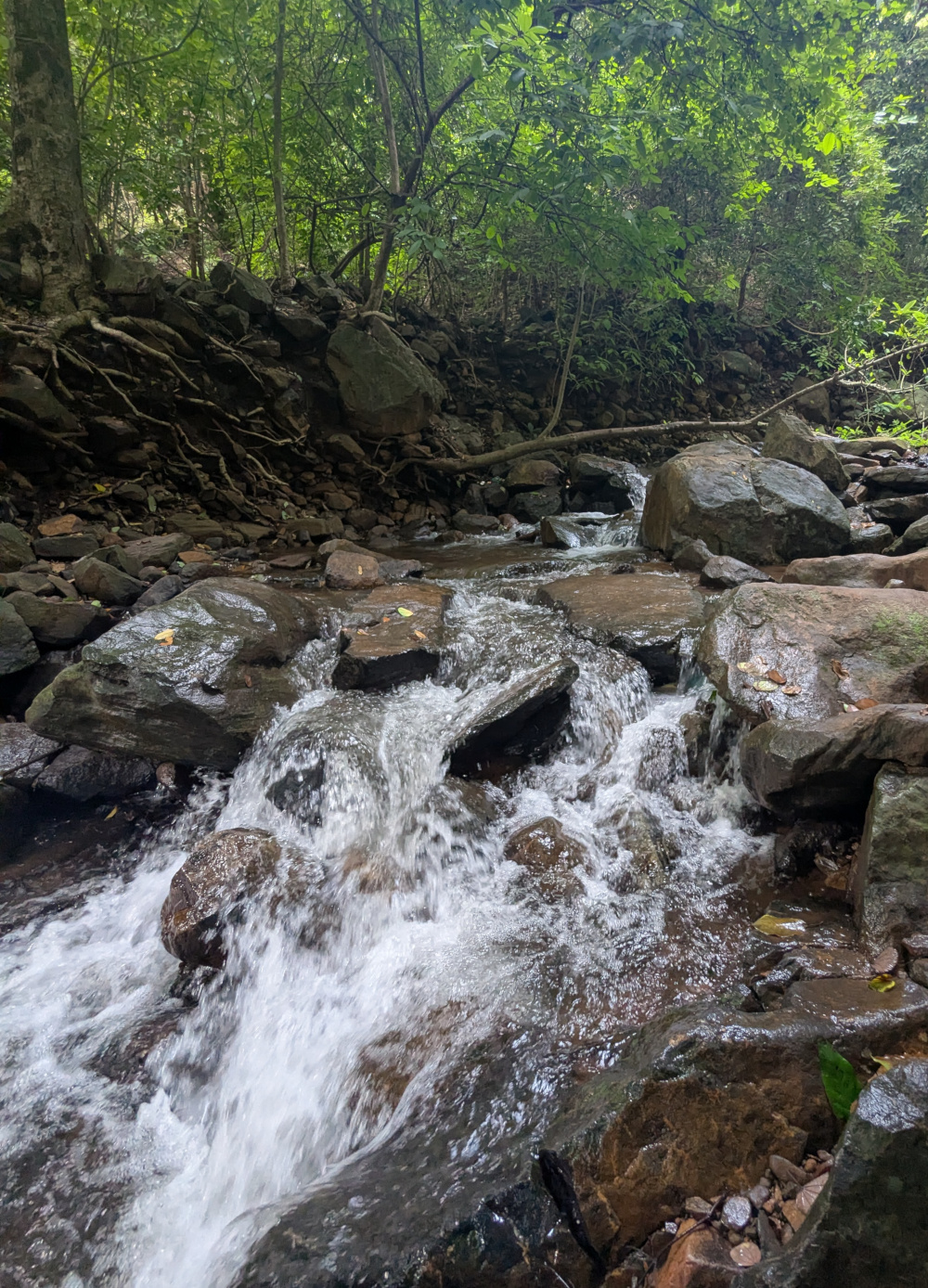
At one point, we heard the sound of running water somewhere in the forest. Following a narrow trail towards it, we came across a beautiful stream flowing through the greenery. It was Gandharba Nala. The setting was lovely, but the sight of plastic waste scattered around the stream, along with some human waste, was disappointing. It seemed particularly unfortunate in such a beautiful part of the forest.
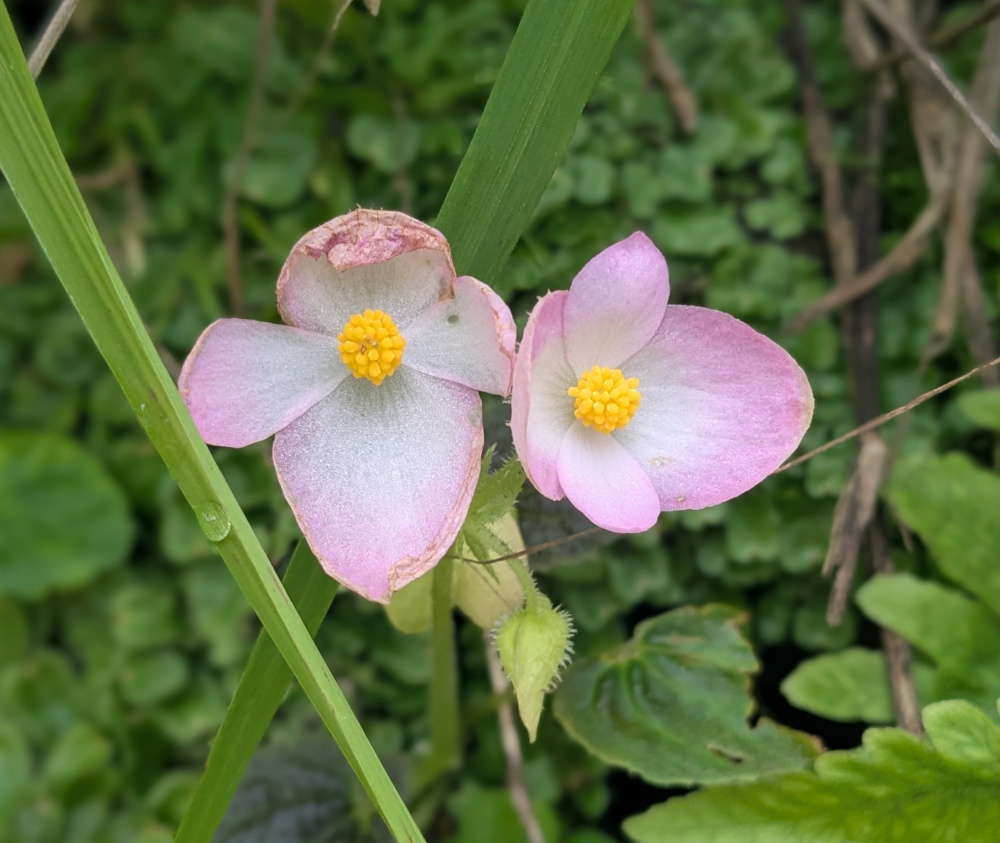
We resumed our climb, by now considerably more exhausted than when we had started. Still, there was plenty to enjoy along the way. The trail continued through dense greenery, with wildflowers appearing here and there. Small shops appeared only occasionally along the route before disappearing again into the forest.
At one point, the familiar trail gave way to a few flights of stairs before joining the usual path again. By then, we were tired enough to welcome any indication that the summit could not be too far away. The returning trekkers we passed gave us some encouragement, assuring us that we were getting close.
We carried on, hoping they were right.
The Final Approach
Eventually, we reached a fork in the road, with a CRPF camp situated at the intersection. There was free drinking water available there, which was a welcome sight by then. We refilled our bottles and took a short breather before continuing towards the temple. We took the left-hand route, as directed by the signs.
The trail became somewhat easier from this point, though our growing exhaustion made the climb no less demanding. At the next fork, we were briefly confused about which way to go. Fortunately, a pilgrim who was walking along the route noticed our hesitation and showed us that the right-hand route led towards the temple. We continued, slowly making our way forward despite our increasingly tired legs.
After walking for quite some time, the forest finally began to give way to the bustle of the temple area. The change was striking. After hours of walking through the quiet greenery, we suddenly found ourselves among large numbers of pilgrims, small shops and duli bearers resting after carrying their passengers up the hill. There was a sense of activity all around us, quite unlike the solitude of the trail we had just left behind.
And then, beyond the crowd, we saw it.
The white temple stood above us on the summit, gleaming against the open sky. After the long climb, it was both a relief and a beautiful sight. We had finally made it to the top.
At the Temple
The white temple stood at the very top of the mountain, reached by a flight of steps from the busy area below. Parasnath is one of the holiest sites in Jainism, and it is believed that twenty of the twenty-four Tirthankaras attained moksha on this hill. Knowing this, the temple seemed to carry a significance far beyond simply being the destination of our trek.
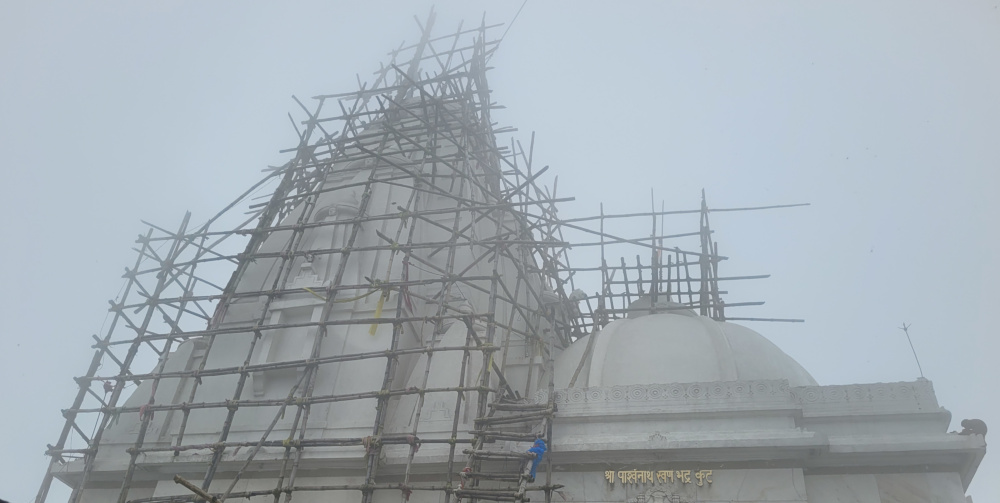
The temple was surrounded by pilgrims when we arrived. At the bottom of the steps, we removed our shoes and left our other belongings behind. Since we were travelling on our own, we took turns going up to the temple, with one of us keeping watch over the belongings while the other went inside.
Inside, the atmosphere was remarkably different from the bustle outside. It was cool and calm, with pilgrims quietly engaged in worship. At the centre of the temple are the Tirthankara Charan Paduka—the sacred footprints of the Tirthankaras carved in stone—which are worshipped by Jain pilgrims. We also visited the gumpha below the temple, adding another dimension to the small complex built into the summit.
After spending so much time climbing through the forest, the quietness of the temple made the visit particularly peaceful. We took some photographs outside before settling down for a while. Along with the other pilgrims, we were given a herbal drink called kadha, which was particularly welcome after the long climb. It seemed to restore some of the energy we had spent getting there.
We sat around for quite some time, taking in the surroundings and enjoying the atmosphere. There was no particular hurry now. Eventually, though, we realised that we still had the entire descent ahead of us and that it was probably time to start back.
The Descent
The descent was considerably more relaxing. Instead of fighting gravity, we were now being partially assisted by it. Our legs were tired, but the journey downhill felt much easier than the climb up. We walked slowly along the familiar path, stopping occasionally to take photographs and admire the wildflowers and the beauty of the forest.
We even stopped for a snack along the way. Our peaceful break was interrupted by a large goat that seemed determined to claim our food directly from our mouths. A silent standoff followed between me and the goat. It stared at me with considerable confidence, apparently expecting me to surrender my food. When it became clear that I was not about to let it lick my face, it eventually walked away with what looked like considerable contempt.
We resumed our journey, but soon encountered a short spell of rain. We put on our rain ponchos and continued walking. Fortunately, the thick canopy above us kept much of the rain from reaching the trail. However, the ponchos came with their own problem—they made it rather difficult to see where our feet were going.
This became particularly relevant when Riya slipped on some loose rock while taking one of the shortcuts and fell to the ground. Fortunately, the injury was minor. I had some NSAIDs with me, which helped reduce the pain fairly quickly, and after a short rest we were able to continue.
For the remainder of the descent, we took occasional breaks to give our tired legs some relief. Despite the fatigue and the small mishap, our spirits remained high. We were now familiar with the trail and could enjoy the walk without the urgency of reaching the summit.
Eventually, we reached the end of the trail and found ourselves back in Madhuban. The place was lively with Jain worship, and we saw both Digambar and Shwetambar monks among the pilgrims. After the long day on the hill, it was interesting to see the pilgrimage continuing below as well.
Our trek was over, but the journey was not. We took a shared cab back to the station, where we would begin the next phase of our trip to a different destination.
A Long Day on the Hill
The numbers gave us a better idea of what we had actually done that day. The walk from Madhuban to the Parasnath temple was almost 10 kilometres, which meant that the return journey brought the total to roughly 20 kilometres in a single day. The ascent took us about six hours, while the descent took another five. The summit stands at around 1,365 metres, representing an elevation gain of roughly 900 metres from Madhuban.
For what was supposed to be an easy one-day trek, it had turned out to be quite a substantial walk. One lesson was particularly clear by the end of it: it is advisable to travel as light as possible. The bags that had seemed manageable at the beginning became increasingly noticeable as the kilometres accumulated. Our trekking poles, on the other hand, turned out to be among the more useful things we had brought.
Despite the fatigue, Parasnath remained a memorable journey. The natural beauty of the hill, the dense greenery, the wildflowers and the peaceful atmosphere around the temples made the long walk worthwhile. There was something particularly satisfying about reaching the summit on foot after spending hours making our way through the forest.
The experience was not without its disappointments. The persistent attempts by the bike operators to persuade us to take a ride were irritating, and the litter scattered throughout the trail was particularly disheartening. These small things took away somewhat from what was otherwise a beautiful and peaceful environment.
Still, those were only parts of the experience. For Riya and me, the journey was as much about making the trek on our own as it was about reaching the temple. We had known from the beginning that the route would involve nearly 20 kilometres of walking; what we had not anticipated was how demanding those kilometres would feel. It was certainly more than we had bargained for, but perhaps that was what made it memorable.
 RSS Feed
Write a comment: