My First True Trek Into the Wild
For the longest time, I had always wanted to go on a trek. The idea of walking through untouched landscapes, breathing in fresh mountain air, and leaving the noise of everyday life behind felt incredibly exciting. But somehow, the biggest challenge was never the trek itself — it was finding enough time to actually do it.
So when I finally got a few days of leave, I knew I wanted to use them for something memorable. Almost perfectly timed, the opportunity to visit Dzukou Valley in Nagaland popped up, and it felt like the universe was giving me the push I needed.
This became my very first true trekking experience — a solo journey that I signed up for through Himalayan Passion. The trip also came at a time when I was going through something emotionally difficult in my life, and in many ways, it turned into an essential healing experience. The mountains offered a quiet kind of space and perspective that I didn’t even know I needed. Honestly, I couldn’t have chosen a more breathtaking place to begin.
Reaching the Trekking Point: From Kolkata to the Hills of Nagaland
This trek was special right from the start because although I was traveling solo, I wasn’t completely alone — I was joined by four other strangers who, in just a day, began to feel like companions on the same adventure.
My journey began with a train ride from Howrah. After a change of trains at Guwahati, I finally reached Dimapur, the gateway to Nagaland. I stayed overnight there to rest up before the real mountain journey began. That evening turned out to be more meaningful than I expected — I ended up having a deep conversation with a fellow traveler. At a time when I was going through something emotionally difficult, that simple human connection and shared understanding brought a lot of comfort. It reminded me how travel often gives you not just new places, but unexpected moments of healing too.
The next morning, our tour company arranged a car to take us deeper into the hills. The ride took around 3.5 hours, and the winding roads leading into the heart of Nagaland were absolutely beautiful — misty hills, lush greenery, and that quiet feeling of leaving the ordinary world behind.
By midday on 7th December 2025, we reached the picturesque village of Kigwema, nestled in the hills near Kohima.
We checked into a cozy homestay called Dawn, where the hosts were incredibly warm and welcoming. The stay felt comfortable, simple, and perfect before a trek.
That afternoon, we explored Kigwema — a charming Naga village with winding roads, traditional houses, and a peaceful local church at its heart. We met a few locals along the way and even stopped for tea at a small local teashop, which felt like such a simple but authentic village moment. During our walk, we also came across a beautiful mountain stream flowing gently through the hills. The clear water, the surrounding greenery, and the calm atmosphere made it feel like a small hidden gem tucked away in the village.
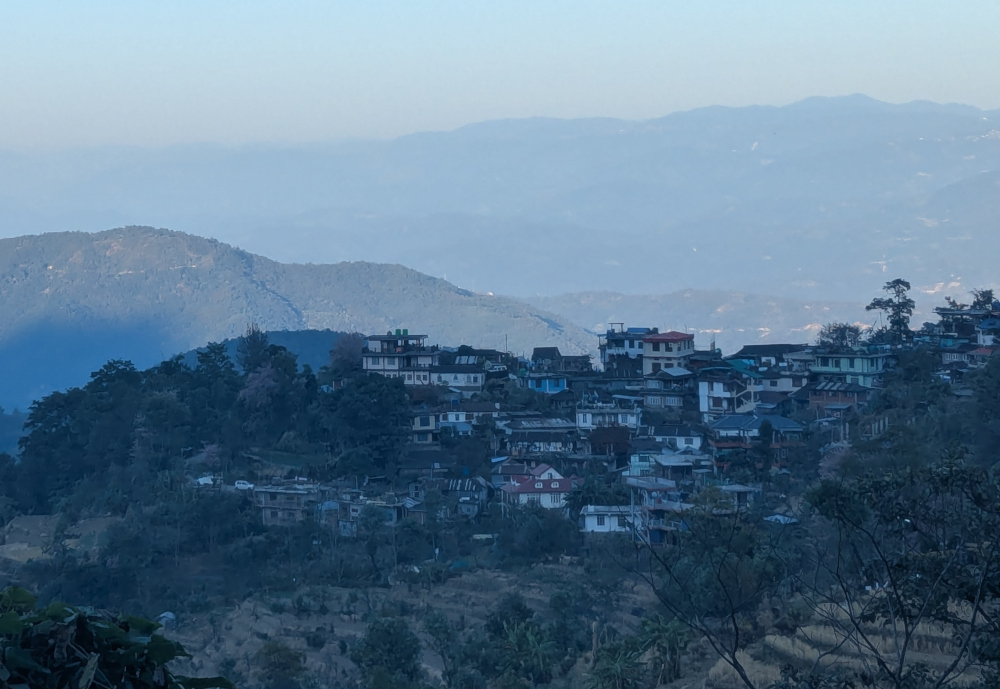
Later at night, our trek guide gave us a detailed briefing about the trek ahead, preparing us mentally for what was to come. After a hearty meal and a comfortable sleep, we woke up early the next morning, left our heavy luggage behind at the homestay, and packed only the essentials.
Originally, there were five of us traveling together — but one of the travelers, who had already done the Dzukou trek before, decided to stay back to experience the famous Hornbill Festival instead. She was incredibly kind and even lent me her smaller, lightweight backpack for the trek, since I didn’t want to carry my heavy rucksack up the trail. That small gesture made things so much easier and reminded me again how supportive fellow travelers can be.
So in the end, the four of us, along with our guide and a local helper, set off towards Viswema — the point where the real trekking adventure to Dzukou Valley would finally begin.
The Trek Begins: Walking Into Dzukou Valley
The real adventure began when we reached Viswema, the official starting point for the Dzukou Valley trek. The first thing we did there was complete the necessary formalities and get our trekking permits. It felt like a small but exciting milestone — once the permit was in hand, it finally sank in that we were about to walk into one of the most beautiful valleys in the Northeast.
From Viswema, we drove a short distance further to the actual trailhead, left the car behind, took a deep breath, and began the climb.
The first part of the trek was easily the most challenging. It was a steep ascent, with stone steps cut directly into the mountainside. The climb was relentless, but in a way, it was also thrilling — this was my first true trek, and every step upward felt like I was earning the journey. It took us almost two hours to finally reach the top.
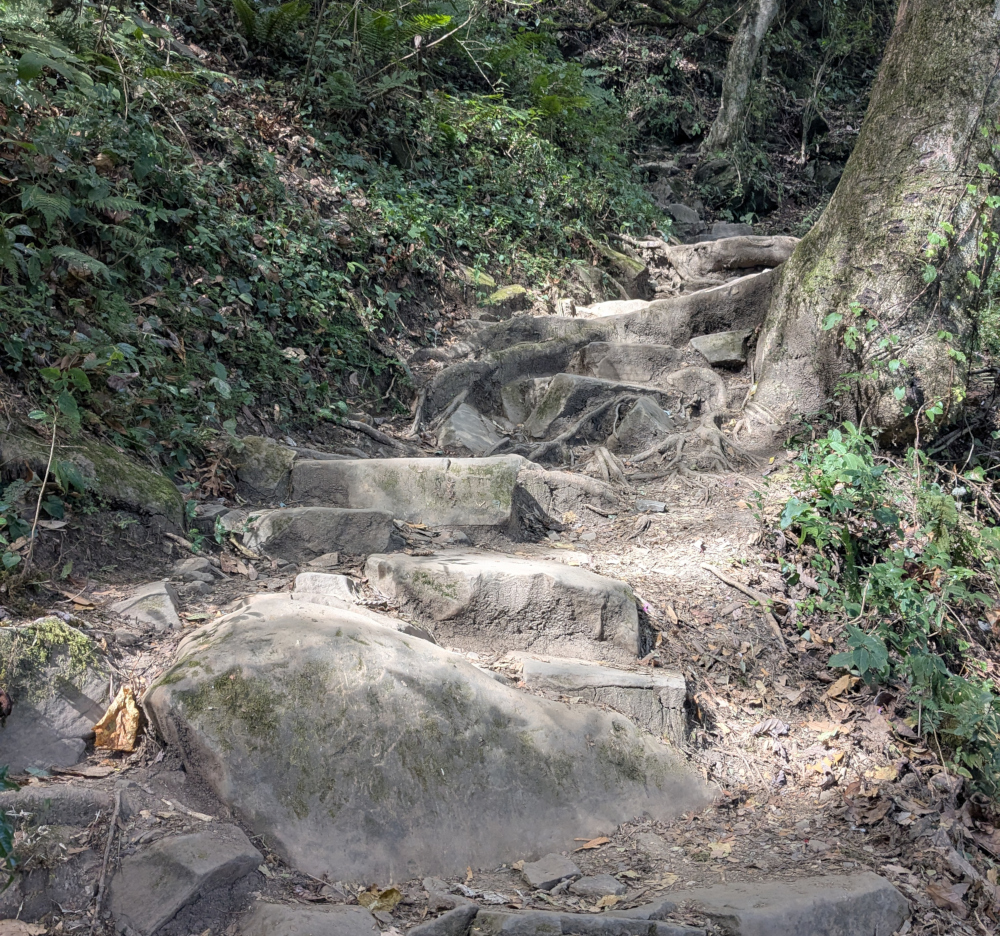
And what a reward it was.
At the summit, there was a stunning viewpoint that opened up to sweeping panoramas of the surrounding mountains. Standing there, catching our breath, the vastness of Nagaland’s hills stretching out in every direction felt almost unreal.
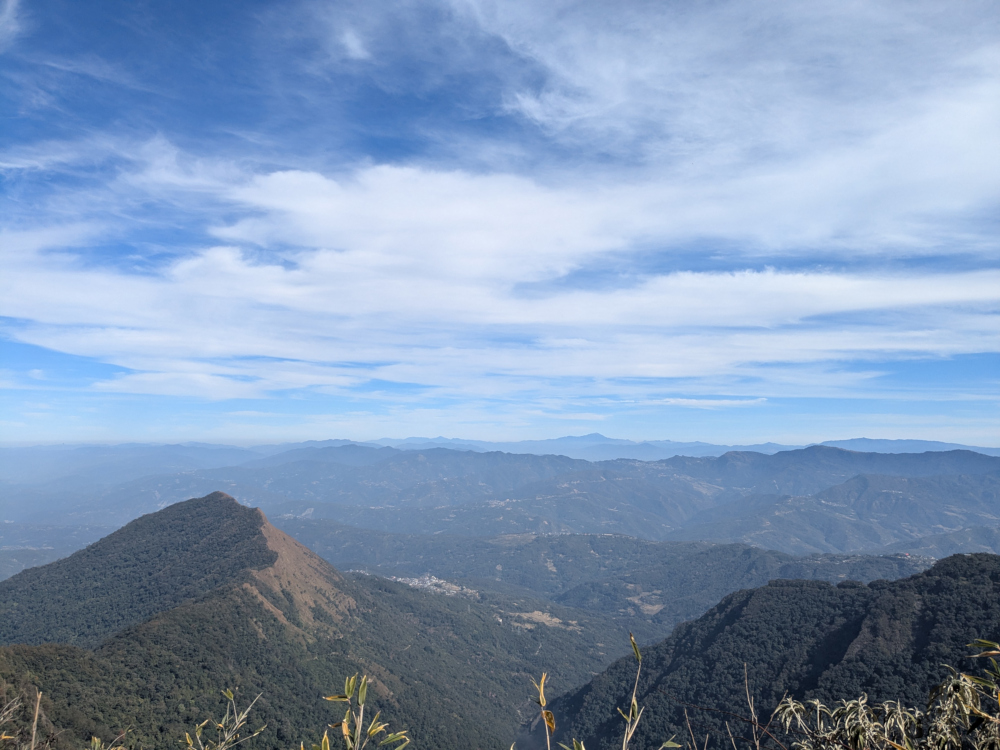
From there, the trek transformed completely. The path towards the valley was carved into the side of the mountain and became much more comfortable — mostly flat, with only gentle ups and downs. The walk started to feel meditative, as if the mountains were slowly guiding us deeper into their hidden world.
There was only one tricky section along the way, where the mountain had split apart due to a past earthquake. To bypass the crack, we had to descend carefully and climb back up again. Interestingly, we chose this dramatic spot for a break. Sitting on the rocks with our packed lunch, surrounded by silence and rugged scenery, felt like such a memorable moment of pause.
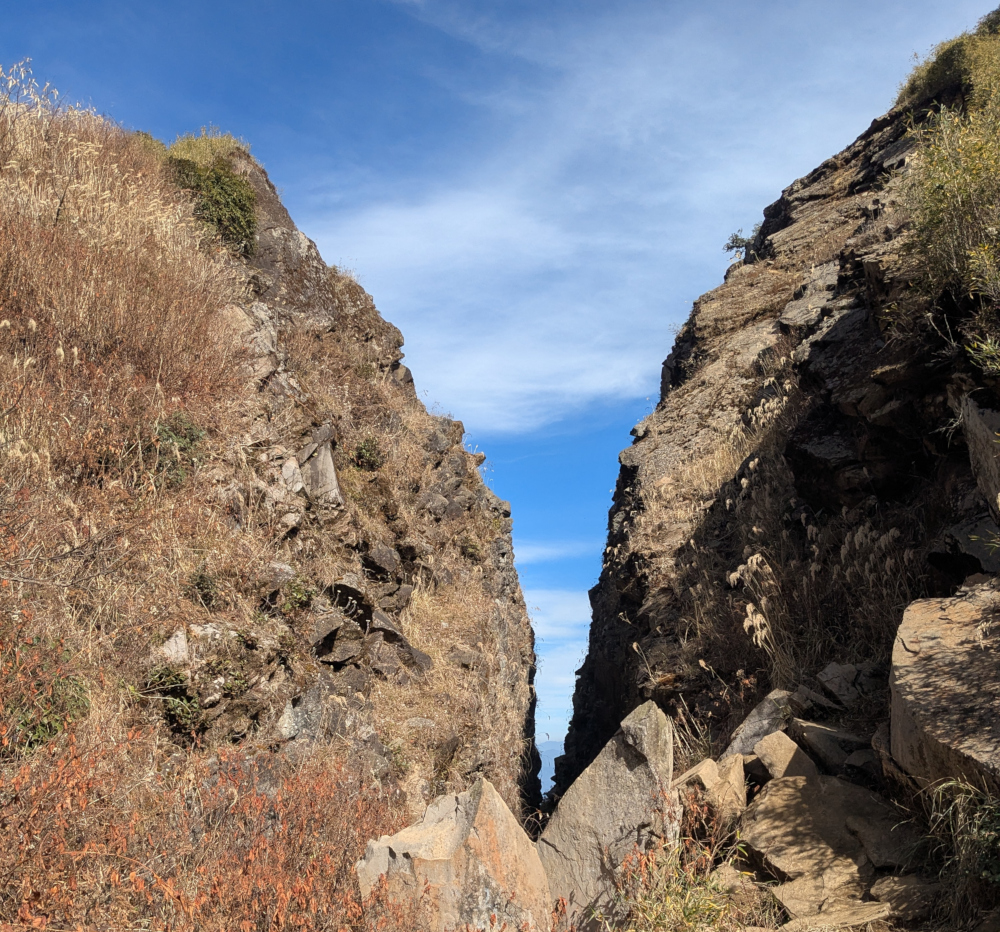
As we continued, the landscape grew even more beautiful. The mountainside was lush with green vegetation, dominated by bamboo groves. In some places, the bamboo formed natural arches over our heads, almost like we were walking through a tunnel of greenery. Beyond the trail, we could see rolling hills stretching endlessly into the distance.
Along the way, gentle little streams crossed our path, their clear water flowing softly through the mountain slopes. These small crossings added such a refreshing touch to the hike — quiet reminders of how alive and untouched this landscape felt.
One striking sight along the way was the presence of many dead trees dotting the slopes — stark silhouettes against the green. We were told they may have been burned by forest fires or struck down by thunder, adding an eerie but fascinating contrast to the otherwise vibrant scenery.
After another two hours of walking through this dreamlike path, we finally arrived at the Dzukou Valley guest house — tired, amazed, and standing right at the doorstep of the valley we had been waiting for.
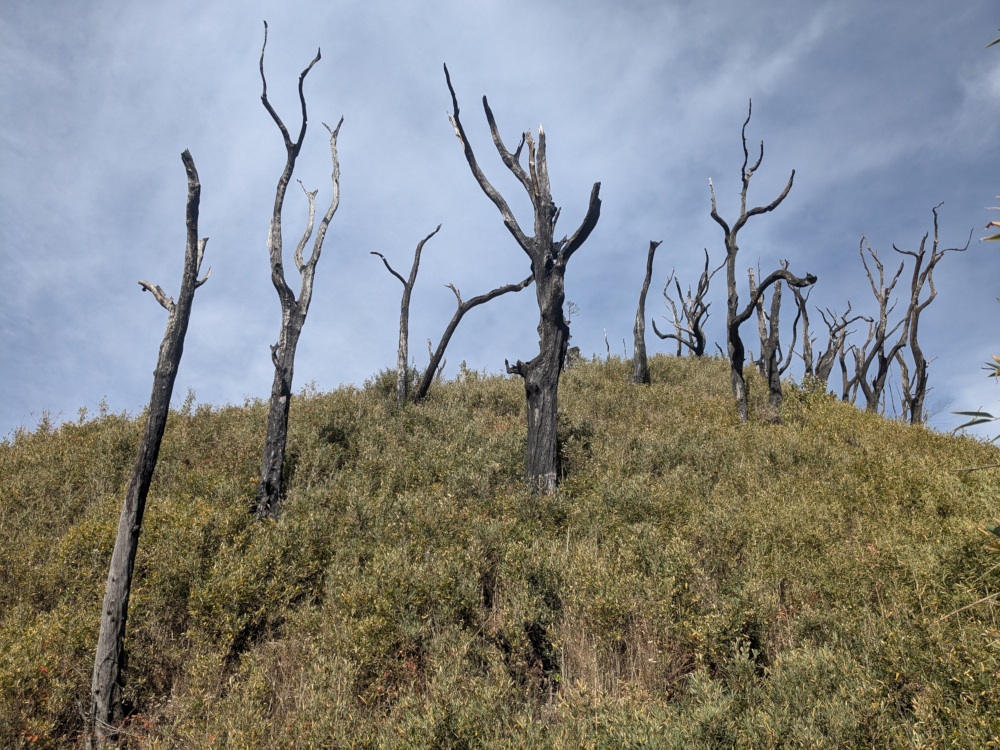
The trek had brought us there… but the real magic of Dzukou was only just beginning.
Staying at the Dzukou Guest House: A Cold Night in the Valley
By the time we finally reached the Dzukou Valley guest house, exhaustion and excitement blended into one overwhelming feeling — we had made it. The guest house sat perched on top of a hill, almost like a small outpost in the wilderness. Just nearby, on the next hill, was a helipad that could be reached by walking down a short distance and climbing up again.
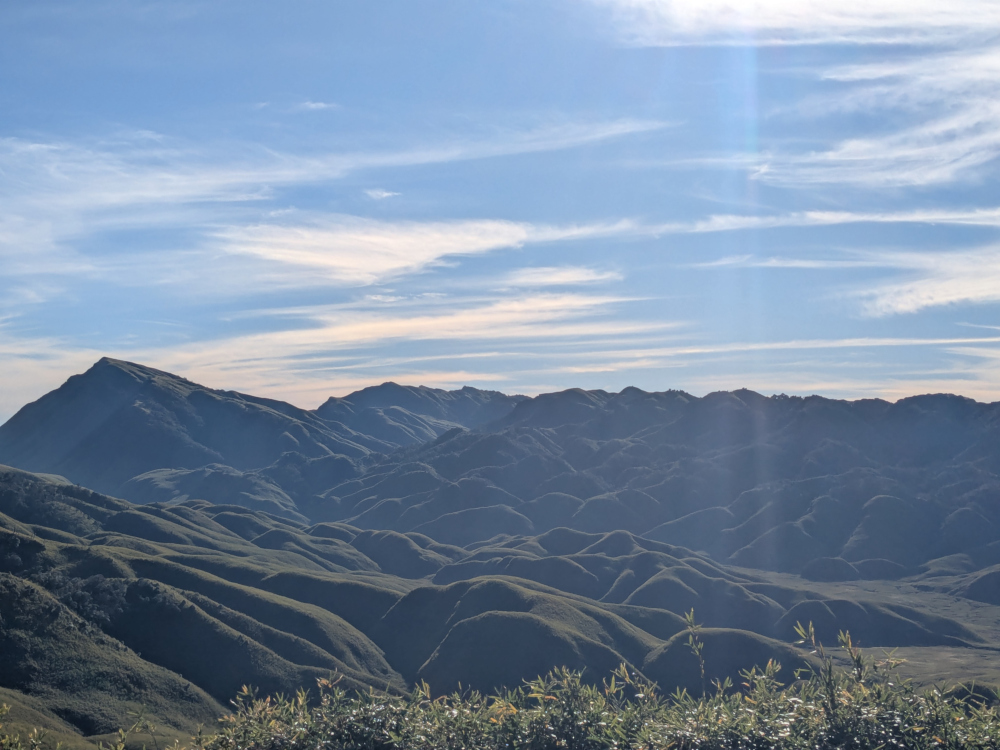
The guest house itself was very basic. It had a large dormitory, open tenting grounds, a kitchen area, a small watchtower, and a few toilets that were, honestly, not very well maintained. Water was also a challenge — the only source was located some distance away, reminding us how remote and untouched this place truly was.
We decided to stay in tents instead of the dormitory. During the trek, we had been warm from all the walking and climbing, but the moment we stopped moving, the winter cold of Dzukou began to sink in. Layers came out immediately — jackets, thermals, everything we had packed.
Soon after settling in, we had some instant noodles, the kind of simple meal that feels oddly satisfying after hours on a trail. There wasn’t much to do around the guest house itself, so the afternoon passed quietly.
Later, I walked up to the helipad to catch the sunset. And that turned out to be one of the most beautiful moments of the trip. The view from there was absolutely stunning — endless rolling hills glowing under the golden light of the setting sun, the landscape looking almost unreal in its softness and scale.
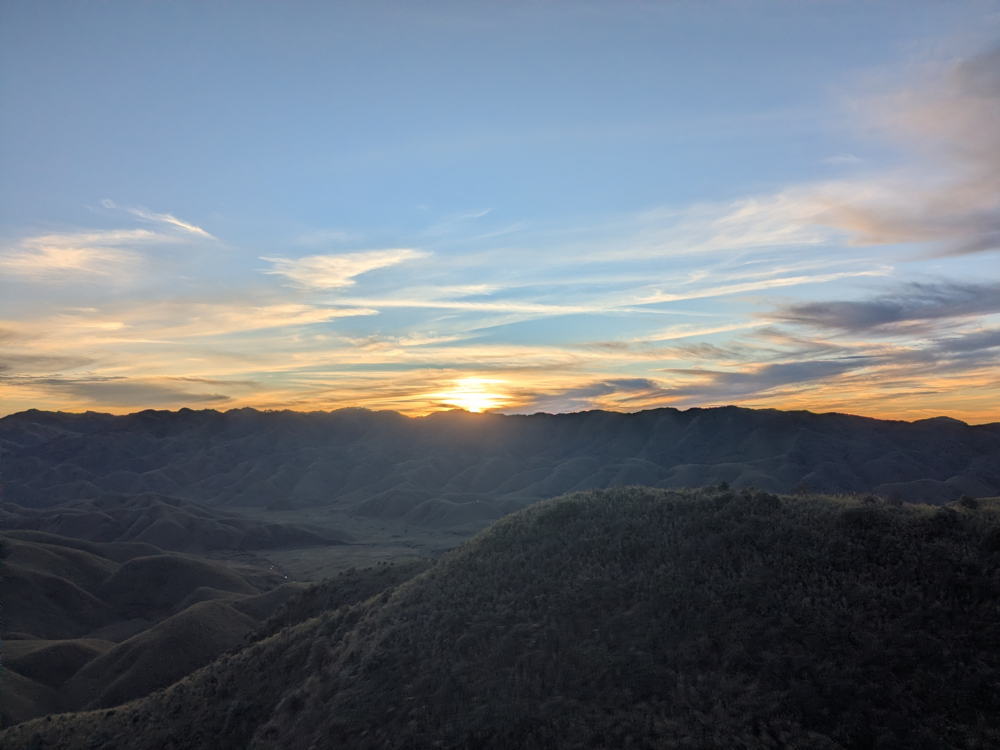
But as quickly as the sun disappeared, darkness fell just as fast. Back at the guest house, a few campfires were lit, though the area became quite crowded with trekkers gathering around for warmth. We had khichdi for dinner — warm, simple, and comforting in the freezing night air.
By nightfall, the valley was bitterly cold. We retreated into our tents, zipped ourselves into sleeping bags, and tried to get some rest in the thin mountain silence.
While the others planned a regular start to the next day, I had something special in mind — I wanted to wake up early and experience the sunrise on my own, a quiet moment in Dzukou that I was already looking forward to.
A Sunrise I’ll Never Forget
I woke up before 4 AM, long before the rest of the guest house stirred. In the freezing cold, I refreshed myself as much as was possible under the circumstances, layered up, and stepped out into the darkness with one goal in mind — to catch the sunrise.
My original plan was simple: walk up to the helipad, the same place where I had watched the sunset the evening before. A few other trekkers were also heading out, so I wasn’t completely alone. Still, the valley was pitch black, and the only sources of light were our flashlights cutting narrow beams through the cold air.
I followed the person walking ahead of me, assuming we’d reach the helipad in about 15 minutes.
But soon, something felt off.
We kept walking… and walking… and it began to dawn on me that we had been on the trail far longer than expected. Even the person behind me, who had been following my lead, started to get worried.
I finally called out to the group in front and asked where we were going.
That’s when they casually replied that they weren’t heading to the helipad at all — they were going to a completely different sunrise point, supposedly much better.
At that moment, I felt a knot of anxiety tighten in my chest.
We were descending further down the mountainside, deeper into the valley, in total darkness. I honestly felt a little scared. But turning back alone in the dark, with no clear sense of direction, seemed even worse. So I kept going, staying with the group, trusting that it would lead somewhere safe.
Eventually, the sky began to lighten slightly, and I started seeing other groups of trekkers scattered along distant trails. That brought a huge sense of relief — at least we weren’t lost.
Still, I worried we might miss the sunrise altogether.
We pushed on through dense vegetation, crossed frozen streams, and climbed up another hill. After nearly 1.5 hours of trekking through darkness and semi-darkness, we finally reached the sunrise point — marked by a massive cross standing silently against the pale morning sky.
We waited there for what felt like a long time, shivering in the cold, watching the horizon.
And then, at around 6:38 AM, the sun finally appeared — slowly peeking over the mountain ridge.
It was phenomenal.
Pure, golden light spilling across the hills, illuminating the vast landscape of Dzukou. I had seen a mountain sunrise once before in Tumling, but that view had been ruined by clouds. This time, it was completely pristine — a magical sunrise in the mountains, clear and unforgettable.
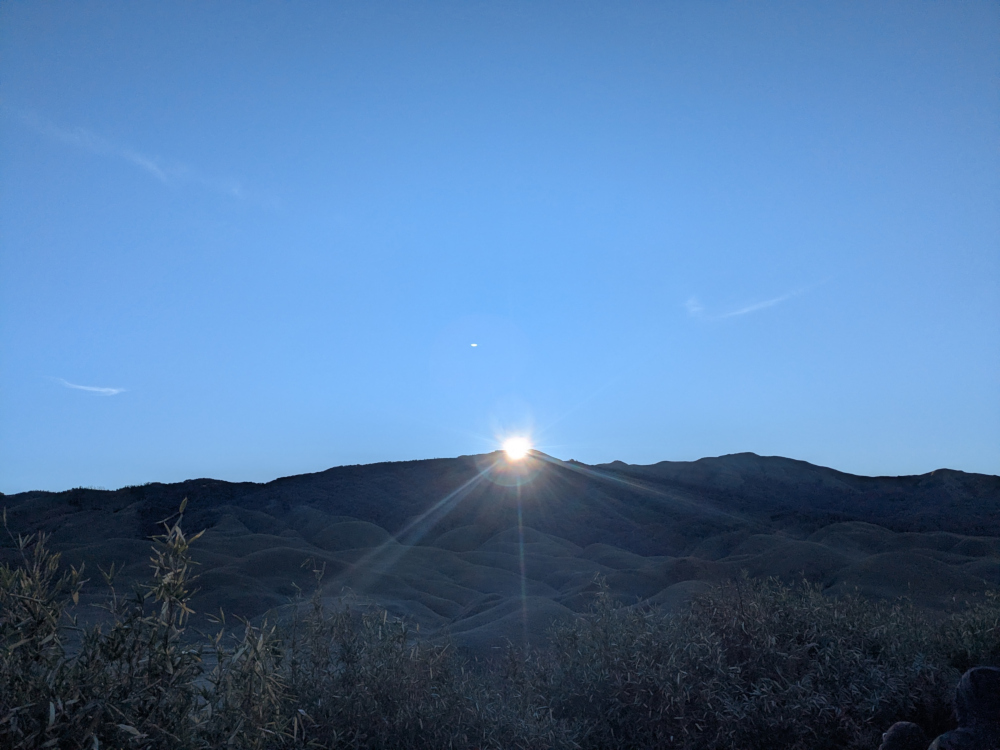
The return journey to the guest house was just as beautiful in a different way. Overnight dew had frozen on the vegetation, and in the morning sunlight it sparkled like tiny crystals. The streams we had crossed earlier looked surreal — thin sheets of ice over flowing water, mist rising gently in the wind.
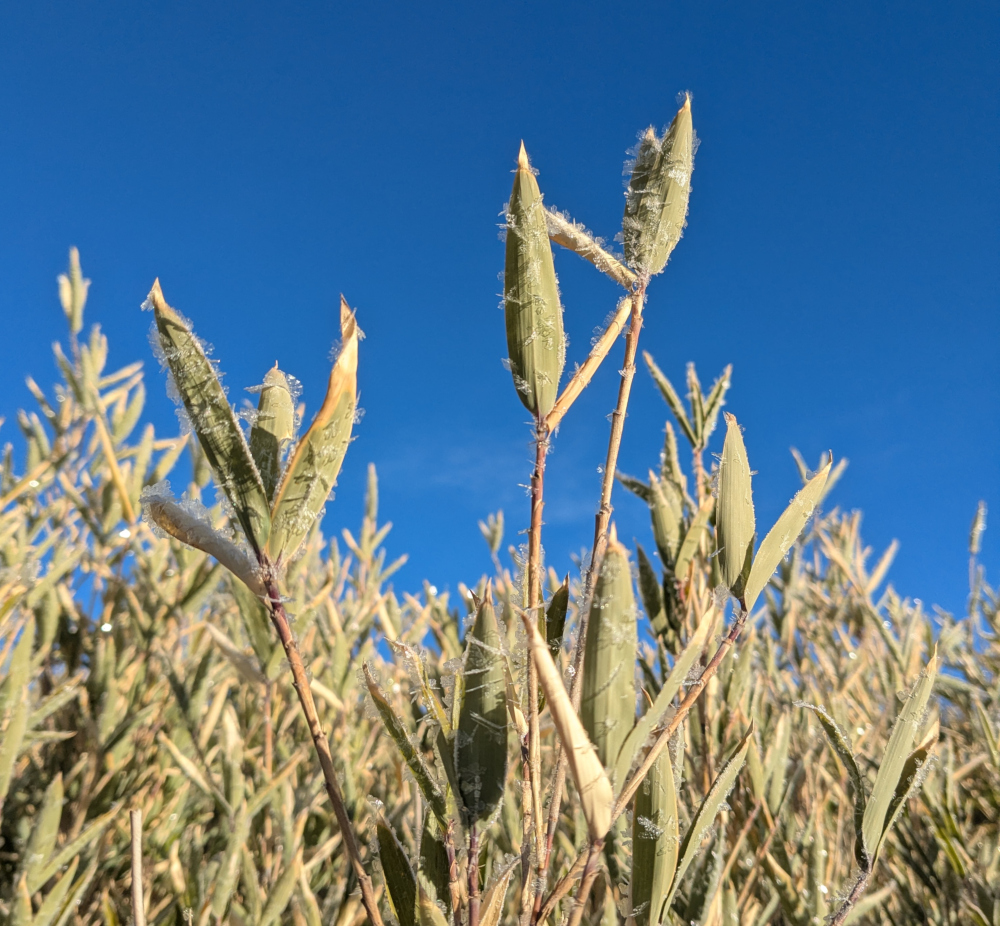
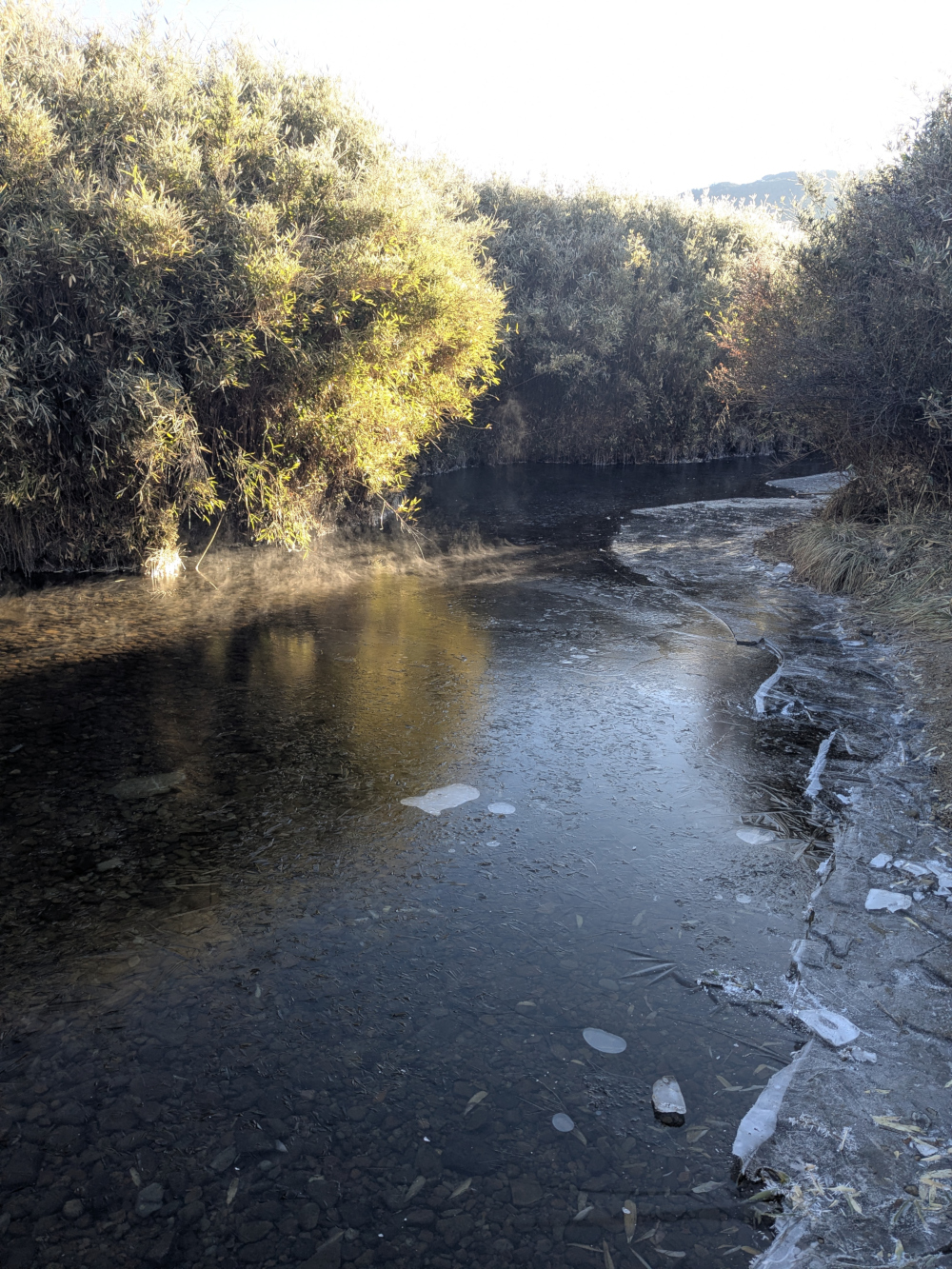
Honestly, I would have missed so much of the valley’s morning beauty if I hadn’t mistakenly followed those trekkers to this viewpoint.
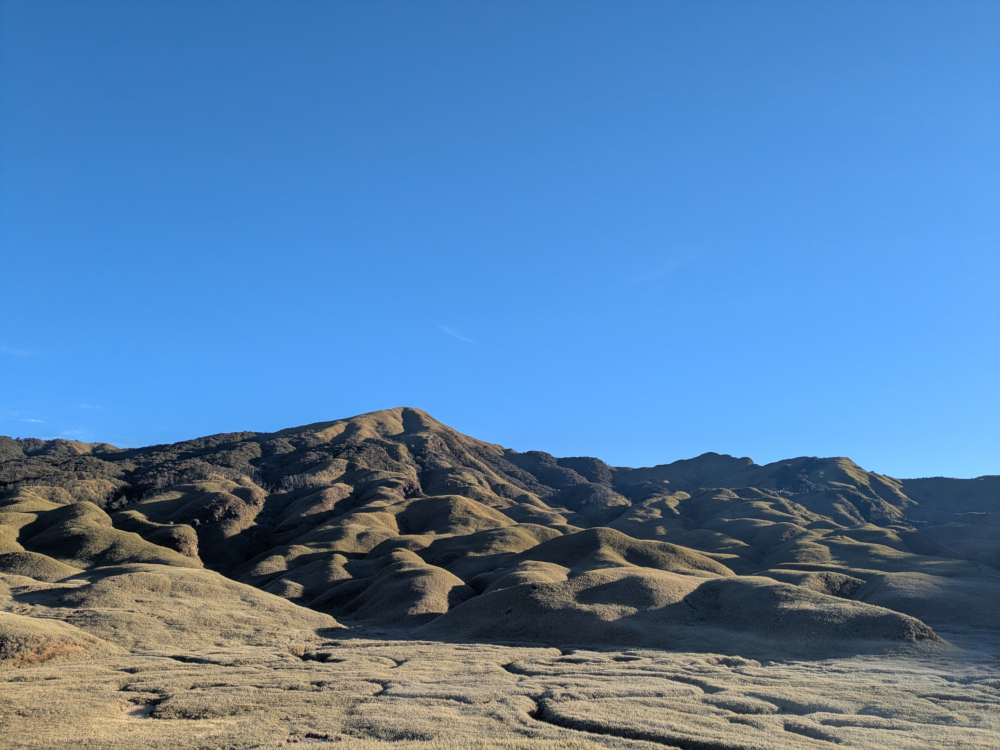
By the time I returned to the guest house, the day had truly begun — and we started preparing for the journey back, with the memory of that sunrise etched permanently in my mind.
The Return Journey: Walking Back With Full Hearts
After the unforgettable sunrise and a quick round of preparations, it was finally time to begin our journey back. Leaving Dzukou behind felt bittersweet — as if we had only just arrived, yet the valley was already asking us to say goodbye.
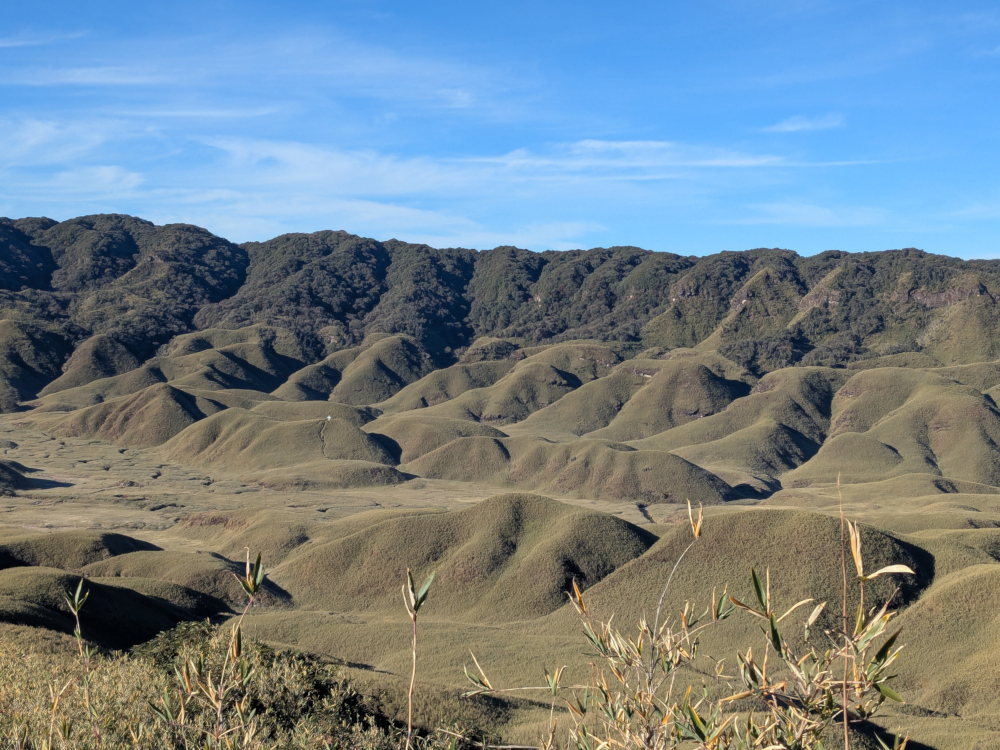
We started retracing the same trail that had brought us in. The walk back was calmer, almost reflective. The path that had felt mysterious and unknown on the way in now felt familiar, like we were walking through memories we had just created.
We moved through the lush mountainside once again, passing the gentle streams and bamboo-covered slopes, until we reached the dramatic crack in the mountain — the earthquake-split section where we had stopped for lunch the previous day. From there, we continued on to the hilltop viewpoint, taking one last long look at the surrounding ranges.
And then came the final descent — down the steep stone steps carved into the mountainside. What had been an exhausting climb on the way up became a careful, knee-testing climb down.
All in all, it took us almost four hours to reach the trailhead again.
Once we got there, the car was waiting to take us back to Kigwema. As we drove back to the homestay, it really hit me — the trek had ended. My first true trekking experience was complete, and it had been everything I hoped for and more.
But the journey wasn’t over just yet.
Nagaland still had another unforgettable experience waiting for us — the famous Hornbill Festival, which I’ll be talking about in a separate post.
Final Thoughts: A First Trek to Remember
As my first true trekking experience, Dzukou Valley was everything I had hoped for — breathtaking landscapes, quiet moments of reflection, and memories that will stay with me for a long time. From the steep climb at the start to the magical sunrise deep inside the valley, it felt like the perfect introduction to trekking in the mountains.
That said, one thing I didn’t expect was how crowded the trail and guest house area would be. Dzukou’s popularity has clearly grown, and at times it took away a little from the sense of solitude I imagined. Still, the valley’s beauty is powerful enough to shine through even with the crowds.
I also have to mention that the tour company managed the trip really well — from transport and coordination to guides and support along the way, everything was smooth and well-organized, which made a big difference for someone doing their first trek.
Overall, Dzukou Valley wasn’t just a destination — it was an experience, and the beginning of what I hope will be many more treks to come.
 RSS Feed
Write a comment: