I recently visited the Sundarbans on a solo trip, joining a tour company that took care of the logistics while I focused on the experience. Traveling alone into one of the world’s largest mangrove forests felt thrilling.
Like many visitors, I carried the quiet hope of spotting wildlife — especially the elusive Royal Bengal Tiger. But even before the journey truly unfolded, I began to sense that the Sundarbans is not a place that reveals itself easily. It is wild, patient, and unapologetically mysterious — and perhaps that is its true charm.
Day 1: Rivers, Roads, and Waiting
My journey began with an early morning car ride from Kolkata to Gadkhali, the last stretch of road before the delta truly begins. As the city faded behind us, the scenery slowly shifted to smaller towns and open rural landscapes. By the time we reached the ferry ghat at Gadkhali, it felt like we were standing at the gateway to the Sundarbans.
From there, our group of 17 boarded a motor boat. I placed my luggage inside the cabin but chose to sit on a chair out on the deck the entire time, enjoying the breeze and the endless views of water and mangroves. The ride was calm and pleasant. On the way, the boat stopped at Gosaba to take on drinking water. Lunch was served onboard — simple, fresh, and perfectly suited to the slow rhythm of the river.
We later visited the Sajnekhali Wildlife Sanctuary, where there were crocodile ponds, watering holes, and a watch tower overlooking the forest. Despite scanning the landscape carefully, there was no wildlife in sight. The place was heavily crowded, which perhaps made any animals even more reluctant to appear.
The leisurely boat journey from Gadkhali to Dayapur took about four hours in total. By the time we reached Dayapur, the light was beginning to soften. We checked into cottages for the night, and I was given an entire room to myself — a small luxury on a solo trip. The cottage was reasonably comfortable and provided everything necessary for a restful stay.
In the evening, there was a performance of local folk dance accompanied by traditional music, offering a glimpse into the region’s culture. Dinner was served at the cottage, and the day ended quietly — with no wildlife sightings, but plenty of new impressions.
Day 2: Deeper into the Wild
Day two began early — we boarded the boat at around 7:30 am. I felt a renewed sense of hope; surely this would be the day for better wildlife sightings. A guide accompanied us onboard, explaining the terrain and the delicate ecosystem of the Sundarbans as we moved further into the waterways.
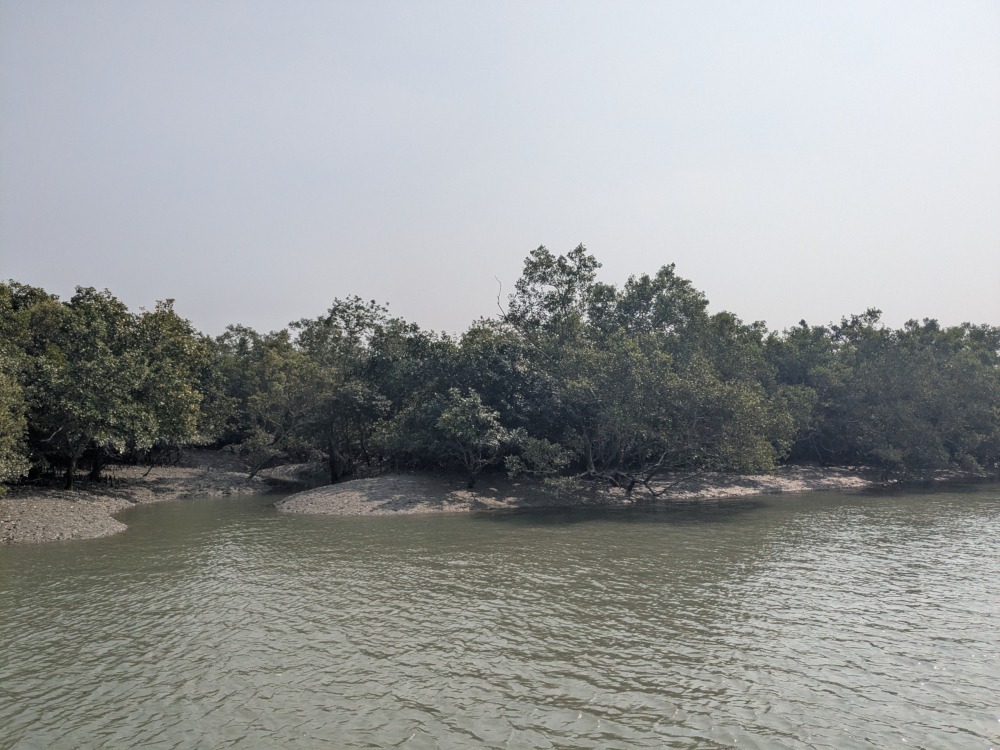
As we cruised along, I noticed nets installed along certain river borders where the river separates human settlements from the forest, designed to prevent tiger crossings into villages. It was a striking reminder that this landscape is shared — cautiously — between people and predators.
However, the sense of isolation I had imagined was quite different from reality. The creeks were heavily crowded with motorboats. At several stretches, it felt less like entering untouched wilderness and more like navigating a busy ferry route in a city. The constant engine noise and visible boat traffic made the forest feel surprisingly accessible — almost urban at times.
We navigated through narrow creeks, officially inside wild territory. At one point, we nearly spotted a crocodile — but by the time we focused our gaze, only its head was visible above the water before it swam away into a narrow channel. A brief, fleeting glimpse. Along the riverbanks, I saw one or two monkeys calmly going about their business, seemingly unbothered by the steady stream of boats.
Lunch was once again served on the boat as we continued our journey.
We stopped at Sudhanyakhali Watch Tower, where we observed different varieties of mangrove plants up close. From the watch tower, vast stretches of wetlands and watering holes spread out before us. Yet the site itself was packed with visitors. The viewing areas felt crowded, and the overall atmosphere resembled a busy tourist spot rather than a remote forest outpost.
Our next halt was Dobanki Camp, which was equally crowded. Despite the rush of visitors along the canopy walk, I finally had a rewarding sighting — a deer standing right underneath the walkway, out in the open. It was calm and still, almost indifferent to the human presence above. There was also a turtle pond where I spotted several turtles resting quietly.
One thing I consistently noticed at all our stops were small shrines dedicated to Bandebi, the forest guardian worshipped by local communities who depend on these lands. Their presence everywhere — near watch towers, camps, and forest entry points — felt grounding amid the constant movement of tourists.
In total, it was about eight hours of boat journey that day. By late afternoon, we cruised back to Gadkhali and then began our car ride back to Kolkata.
The day left me with mixed feelings — the forest was vast and powerful, yet the experience was far more crowded than I had imagined.
Final Thoughts: Between Expectation and Reality
I will admit it — I was disappointed.
When I planned this trip to the Sundarbans, I carried a quiet but persistent hope of witnessing something extraordinary. A tiger emerging from the mangroves. A dramatic wildlife moment that would make the long boat rides worthwhile. Instead, what I experienced was a forest that remained largely hidden — and a tourism circuit that was far more crowded than I had imagined.
The creeks filled with motorboats, the packed watch towers, the constant movement of visitors — at times it felt less like entering raw wilderness and more like being part of a floating procession. The animals, perhaps wisely, kept their distance. Apart from a deer standing calmly under the canopy walk, a few turtles, a glimpse of a crocodile’s head, and some indifferent monkeys, the forest revealed very little.
And yet, as I reflect on it, maybe that is the Sundarbans’ quiet lesson.
It does not perform on demand. It does not guarantee sightings. It remains vast, guarded, and selective. The disappointment I felt is real — but so is the understanding that true wilderness is not a curated experience. It exists on its own terms.
I went looking for dramatic wildlife encounters. I came back with something subtler: a deeper respect for a landscape that refuses to entertain, that protects its mysteries, and that reminds visitors that nature is not obliged to show up just because we bought a ticket.
 RSS Feed
Write a comment: