Tucked away in the Bankura district of West Bengal, Bishnupur is a lively, populous town that feels instantly familiar—much like any other town in Bengal. When I arrived, the streets were buzzing with activity: small shops open for the day, vendors calling out to customers, and people moving purposefully through their routines. Brightly colored totos (electric rickshaws) zipped past every few minutes, becoming an unmistakable part of the town’s rhythm.
And yet, rising from this everyday energy are centuries-old terracotta temples that seem almost quietly observant. The contrast is striking. Bishnupur isn’t an isolated relic or a silent heritage site—it’s a living town where history stands comfortably alongside the hum of daily life.
Arrival in Bishnupur
We arrived in Bishnupur by train from Kolkata, watching the landscape gradually shift from the dense urban stretch of the city to the quieter, red-soil expanses of rural Bengal. The journey itself felt like a gentle transition—from rush to rhythm.
Bishnupur railway station was modest but busy, reflecting the town’s everyday energy. Just outside, a line of totos waited for passengers. We hopped into one, rode through the bustling streets toward the West Bengal Tourism Development Corporation property where we had booked our stay.
The accommodation was comfortable and well-maintained, offering a welcome rest after the journey. What stood out even more was the food—fresh, flavourful, and authentically Bengali. After settling in and enjoying a satisfying meal, we arranged for a toto to take us around town later. It felt like the perfect way to explore Bishnupur—slow, open, and in sync with the town’s pace.
Exploring the Terracotta Temples of Bishnupur
Exploring Bishnupur by toto turned out to be the perfect way to experience its heritage. The electric rickshaw moved at an easy pace, carrying us through narrow lanes and open grounds, allowing us to absorb both the monuments and the everyday life unfolding around them.
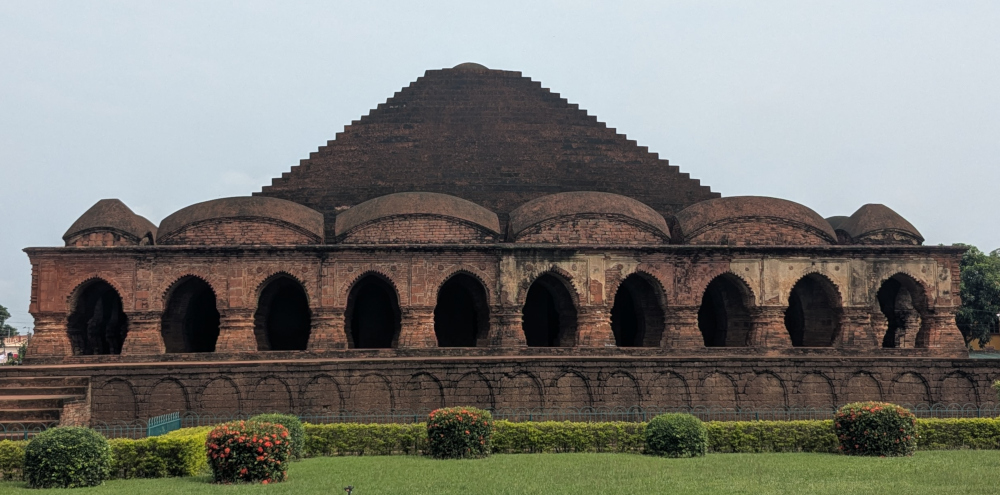
We began at the iconic Rasmancha, whose unique pyramid-like structure immediately sets it apart. From there, we visited the still-functional Madan Mohan Temple, where worship continues even today, keeping centuries-old traditions alive within its historic walls.
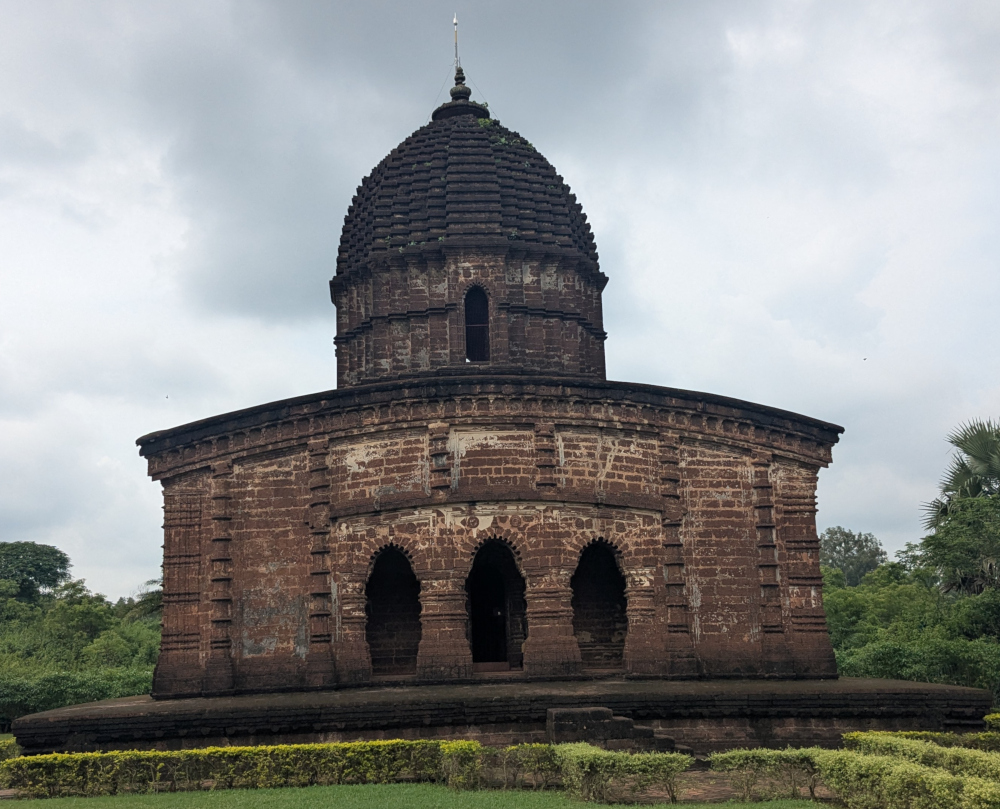
The intricate craftsmanship of the Jor Bangla Temple and the richly adorned Shyam Rai Temple was breathtaking. We also explored the Lalji Temple, Radhashyam Temple, Radhamadhab Temple, Kalachand Temple, and Radhagobinda Temple, each adding its own architectural nuance while staying true to Bishnupur’s distinctive temple style. The symmetrical Jor Mandir Complex added further elegance to the landscape.
At the stone chariot, we paused and noticed children playing around and climbing onto it. The scene felt natural—heritage seamlessly blending with daily life—yet it also underscored how fragile these historic structures are in the face of constant human interaction.
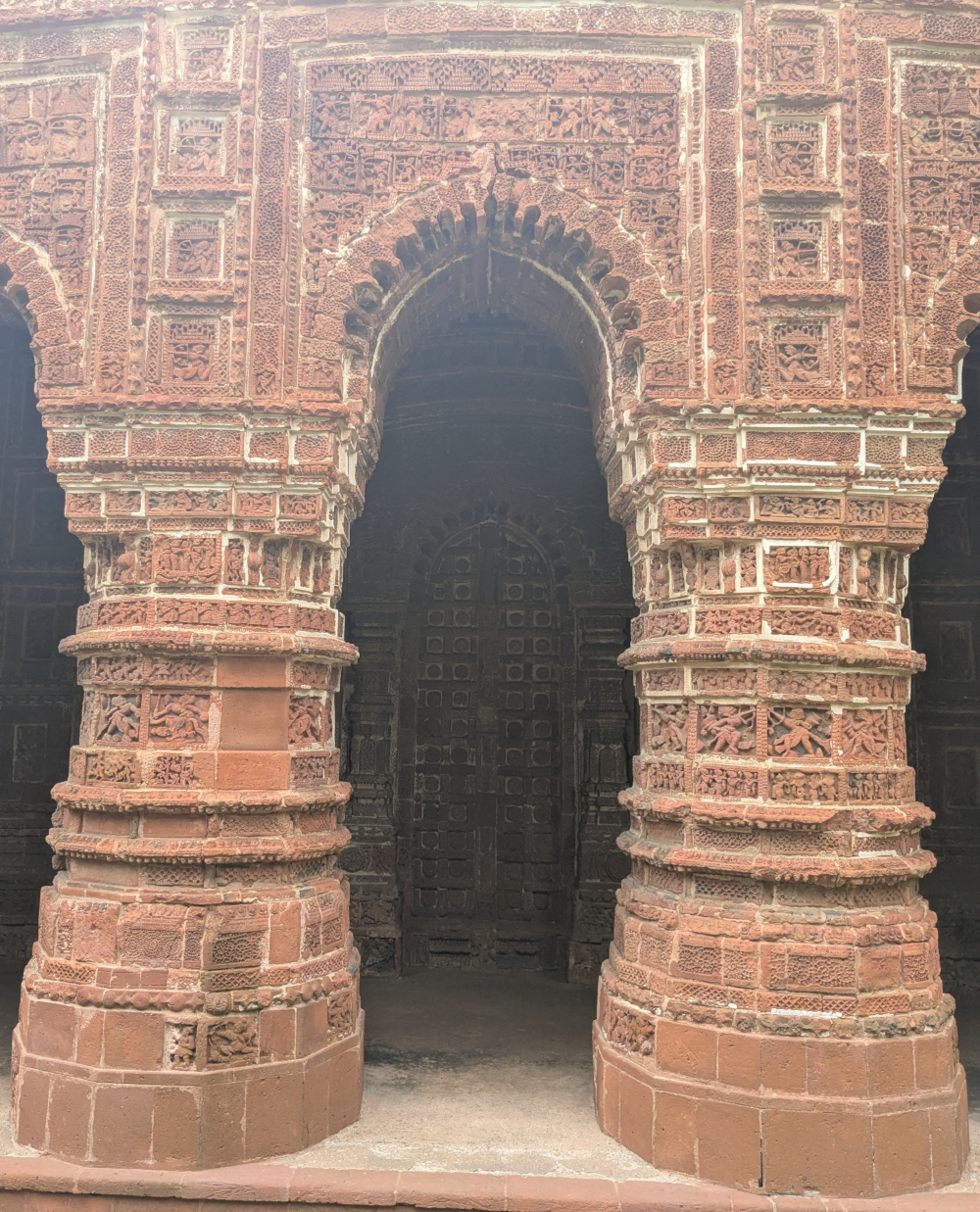
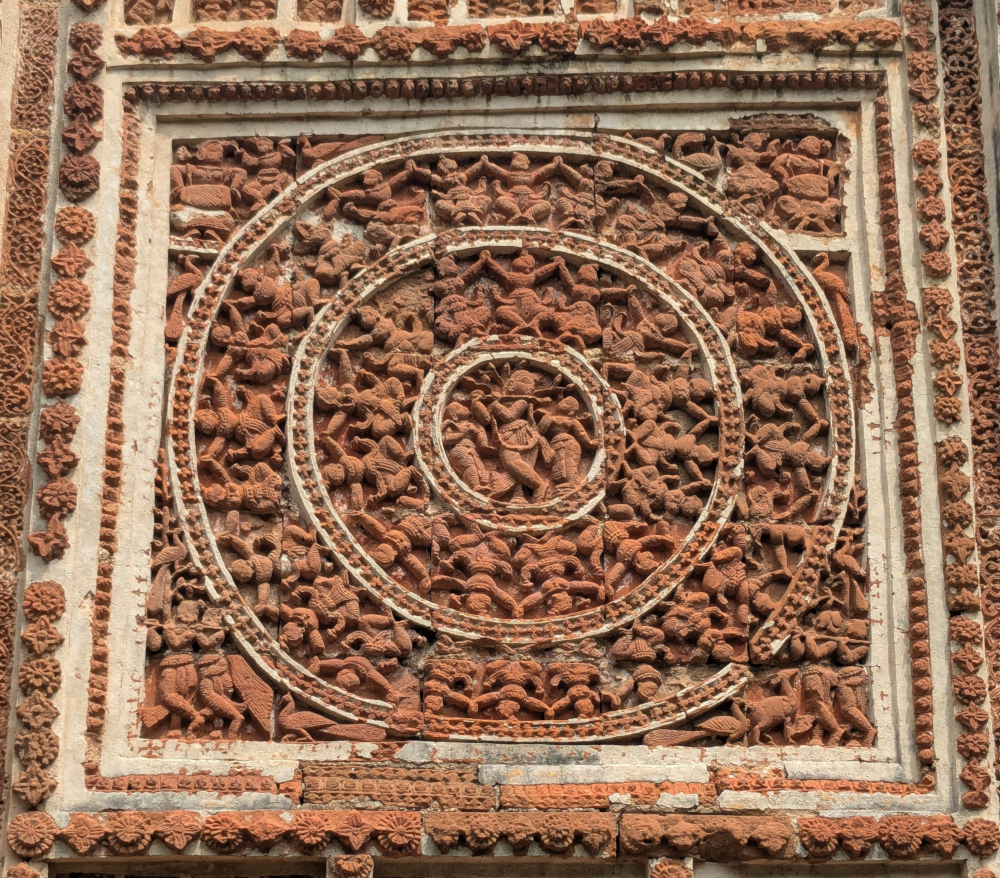
What truly defines Bishnupur is its terracotta artistry. The temple walls function like narrative scrolls in baked clay, depicting episodes from the Ramayana and Mahabharata, scenes from Krishna Leela, royal processions, musicians, dancers, animals, and glimpses of everyday life from centuries ago. The detailing is astonishing—delicate expressions, ornamental patterns, and rhythmic compositions crafted entirely from molded and fired clay. Even after hundreds of years, much of the work remains remarkably expressive. However, time, weather, and exposure have softened or erased several panels. While the Archaeological Survey of India has recently intensified conservation efforts, some of the finer details have already been lost to erosion.
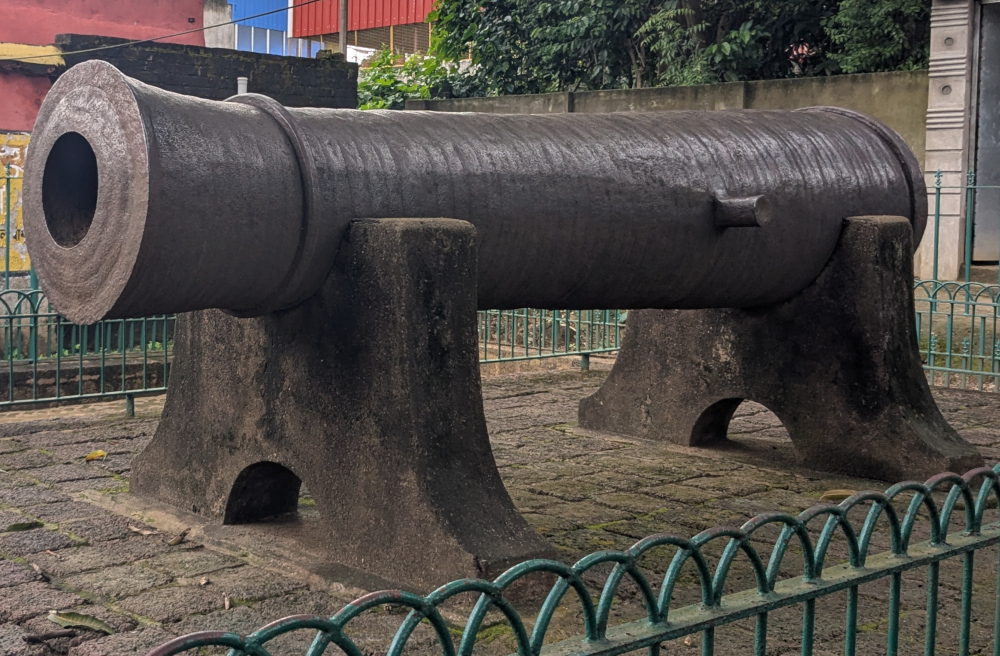
Standing apart from the temples is the imposing Dalmadal Gun. Massive and solid, it represents a different chapter of Bishnupur’s history—one of defense and resilience. Believed to have been used to protect the town from invasions, the cannon reminds visitors that Bishnupur was not only a center of art and devotion but also a fortified kingdom prepared for conflict.
Entry tickets are required for several of the protected monuments, and a convenient combined ticket can be purchased from a single counter—we got ours at the Rasmancha.
Riding from one monument to another in our toto, it became clear that Bishnupur’s heritage is not frozen in time—it lives and breathes alongside the town’s everyday rhythm.
Exploring Beyond Bishnupur
While Bishnupur’s temples were the highlight of our trip, we also set aside time to explore a few nearby attractions that added a different dimension to the experience.
One of the most refreshing excursions was a ride through the Joypur Forest. The drive took us through stretches of sal and palash trees, with filtered sunlight falling across the red laterite soil. The forest felt calm and expansive—a sharp yet welcome contrast to the architectural density of Bishnupur’s temple clusters. The quiet roads and greenery made the ride itself memorable, offering a glimpse of rural Bengal’s natural beauty.
We also visited the Tridhara Milan Mandir in Panchmura village. The temple complex had a serene atmosphere, and what immediately caught our attention was the massive statue of Lord Shiva standing prominently within the premises. The scale of the statue was striking against the open sky, creating a powerful visual presence.
Inside the temple, we paused to listen to kirtan in progress. The rhythmic chanting and devotional music filled the space, creating an immersive spiritual experience. Unlike the historical quietness of Bishnupur’s terracotta temples, this was devotion in motion—voices rising in unison, drums keeping time, and faith expressed through sound.
Together, these nearby visits complemented our exploration of Bishnupur beautifully—blending nature, village life, and living spirituality into the journey.
Final Thoughts
Our visit to Bishnupur was more than just a heritage tour—it was an experience of contrasts. A bustling town with totos weaving through busy streets, children playing beside centuries-old monuments, and temples that are both preserved relics and living places of worship.
The terracotta artistry speaks of extraordinary craftsmanship, while places like Joypur Forest and Tridhara Milan Mandir add layers of nature and living spirituality to the journey. Bishnupur is not frozen in time—it evolves, breathes, and carries its history within the rhythm of daily life.
If you are looking for a destination that blends art, history, spirituality, and rural Bengal’s natural charm, Bishnupur offers all of it—quietly, gracefully, and authentically.
 RSS Feed
Write a comment: